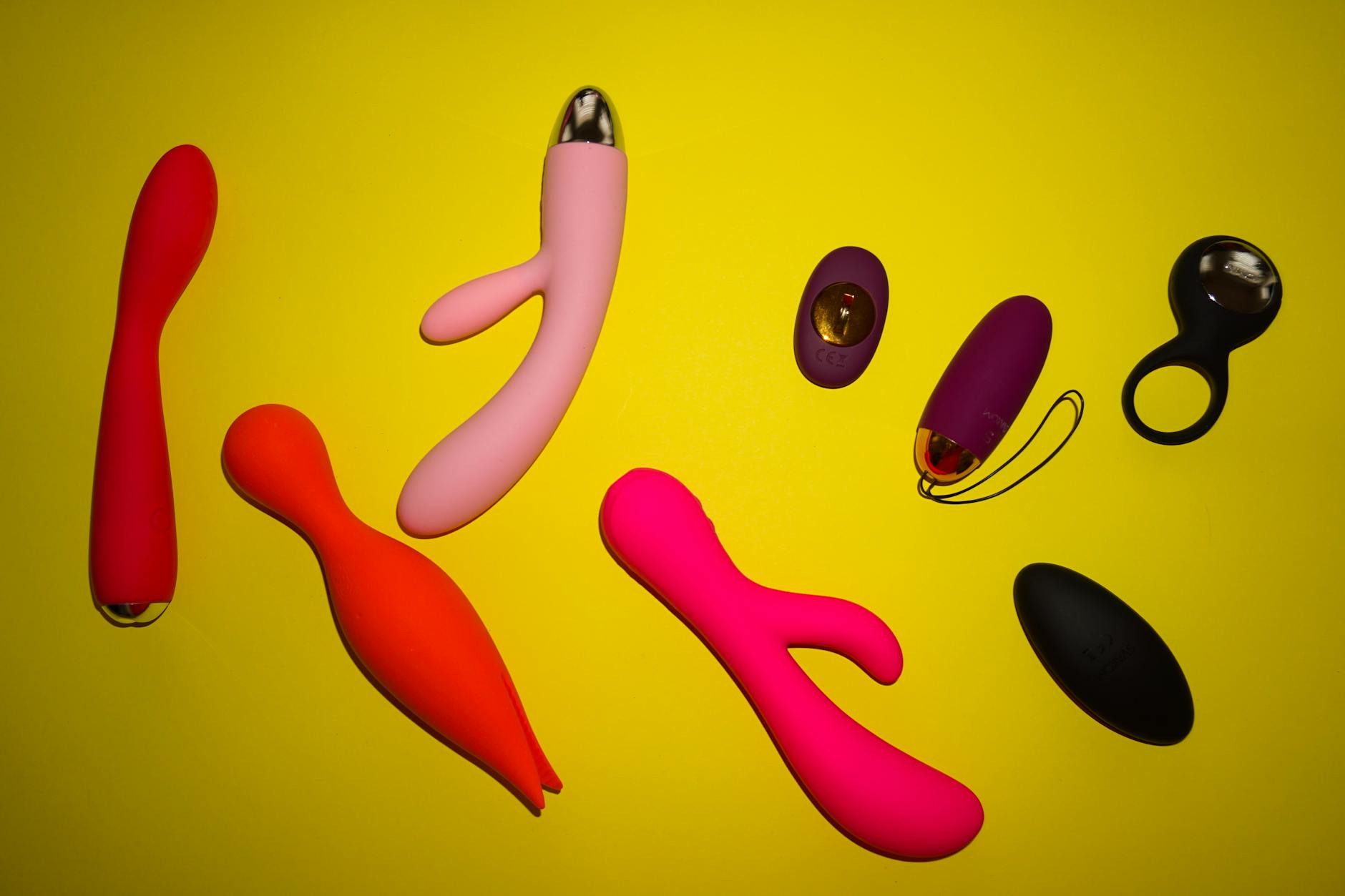
Let's talk about the myth first
Multiple orgasms in one session sound like they require either a porn-level pain tolerance, a partner with endless energy, or some genetic lottery win. None of that's true. The reality is simpler: most people have never learned how to use the right tool the right way. A lemon vibrator changes that math entirely.
Here's what I see in my practice. People approach multiple orgasms like they're chasing a performance metric. That pressure kills the whole thing. But when you understand how air-suction technology works on your body, and you build in the right pacing, multiple orgasms stop feeling like a stretch goal and start feeling like the natural shape of your pleasure.
Why air-suction works better for back-to-back sensation
Traditional vibrators create pleasure through rapid contact against your clitoris. That's efficient for one orgasm. But after that first one, direct friction can feel raw or overstimulating. You need a break, or you need to stop entirely.
A lemon vibrator works differently. The suction technology creates a seal around your clitoris, then pulses pressure in and out. This stimulates the thousands of nerve endings in that area without the sustained mechanical friction. Here's the key part: your clitoris recovers faster because the tissue isn't being abraded. The stimulation is more comfortable to sustain, which means you can build toward a second orgasm with less downtime.
It's like the difference between sprinting and cycling. One exhausts you fast. The other lets you keep moving.
The three-part structure that actually works
If you're aiming for multiple orgasms, structure matters more than raw intensity.
Part One: The slow climb. Start on pattern 1 or 2 with your lemon clitoral vibrator. Let your arousal build naturally for 10 to 15 minutes. This isn't rushing. Your blood flow increases, your clitoris swells slightly, and your sensitivity deepens. Most people skip this part and wonder why they can't have a second orgasm.
Part Two: The first release. Once you're close, bump up to pattern 3 or 4. Move toward your first orgasm. Don't hold back or try to make it last. Let it happen. The first orgasm triggers a cascade of physiological changes that actually makes the second one easier to access.
Part Three: The recovery-without-stopping. This is where most people fail. After your first orgasm, keep your lemon vibrator in place, but drop the intensity immediately back to pattern 1. Stay there for 30 seconds to 2 minutes. Your clitoris is hypersensitive right now, and direct stimulation will feel overwhelming. The low-intensity suction keeps the sensation alive without pushing you into discomfort. Your arousal stays high, and you're resetting for round two.
Building sensitivity between orgasms
Here's something counterintuitive: after your first orgasm, your clitoris doesn't need a break from touch. It needs the right kind of touch.
With a lem vibrator, that means staying with lower patterns while you're in that vulnerable, post-orgasm window. Your body is reading the continued gentle pressure as "we're still in this," which keeps your nervous system engaged. Your arousal doesn't spike back down to baseline. Instead, it plateaus at a high level, making it much faster and easier to climb toward a second (or third, or fourth) orgasm.
This is why air-suction clitoral vibrators are better than traditional toys for this. You can keep stimulating at a sustainable intensity without causing the pain or numbness that comes from sustained vibration friction.
Pacing between orgasms
Listen to your body, but also understand the rhythm. After your first orgasm, expect the second to take about 5 to 10 minutes to build. The third often comes faster, sometimes in 3 to 5 minutes, because your nervous system is now in a sustained state of arousal and response.
But if you're feeling fatigued, stop. Multiple orgasms only work if they feel good. The moment they start feeling like work, you've crossed into performance anxiety territory, and that kills everything.
Some sessions will give you two strong orgasms. Other nights might be four or five, but they're lighter or more diffuse. That's normal. Your pleasure isn't a static thing. It shifts based on stress, hormone levels, how much sleep you got, and what's happening in your relationship.
The mental game
This is the part I talk about most with my clients. Your brain is responsible for about 70% of your orgasm. Your body is just executing what your nervous system is telling it to do.
When you're trying for multiple orgasms, your brain often gets in the way. You start monitoring instead of feeling. You're checking in with yourself: "Did I come yet? Should I be closer?" That self-observation kills arousal instantly.
Instead, practice what I call "outward focus." Pay attention to the physical sensations without narrating them. Notice the warmth, the pressure, the rhythm of your breathing. Don't evaluate. Just feel. This sounds simple, but it's genuinely the hardest part of the process for most people.
Using a lemon vibrator actually helps with this, because the suction sensation is novel enough that it naturally pulls your attention outward into the experience itself, rather than into your head.
Solo versus partnered sessions
The dynamics shift depending on who's involved. Solo, you have total control over pacing, intensity, and when you stop. That's your starting point. Get comfortable with multiple orgasms alone first. You'll understand your own rhythm, what speeds up your recovery, and how many is actually sustainable for you.
With a partner, the challenge is different. If they're involved, you need to communicate about the goal before you start. "I want to explore multiple orgasms tonight" is a useful preview. It sets expectations and takes pressure off your partner to do anything beyond what you've already discussed.
With your lemon vibrator, many partners feel less threatened by the device than by traditional vibrators. There's less sensation overwhelm, which can make it easier to have them involved without it feeling like you're choosing the toy over them. Some couples find using a lem vibrator together feels more intimate than intercourse.
When to scale intensity, and when to stay low
There's a temptation to assume that intensity builds better sensations. Not quite. Here's the real pattern:
Your first orgasm often needs higher intensity to cross the finish line. But your second and third benefit from moderate intensity, because your body is already primed and responsive. Once you're past three orgasms, if you're still going, often lower intensity actually keeps the sensations cleaner and easier to sustain.
With a lemon vibrator's pattern options, you can micro-adjust. You're not locked into "on" or "off." You've got options 1 through 8 (or wherever your specific model maxes out). This granularity matters. It lets you dial into what your body actually wants in that moment, rather than forcing it to adapt to a preset choice.
Recovery and what comes after
After you've had multiple orgasms, your body needs genuine rest. Not the 20-second kind. Keep your lemon vibrator nearby but switched off. Lie still. Let your heart rate come down. This is real pleasure recovery, not just physical. Your nervous system needs to integrate what just happened.
Some people feel energized afterward. Others feel deeply tired. Both are fine. If you feel emotionally tender or vulnerable, that's normal too. Multiple orgasms sometimes bring up feelings, especially if you're not used to that level of pleasure in your own body. That's not something to fix. That's something to respect.
Common obstacles and how to move through them
"The second orgasm never comes." This usually means you're stopping stimulation too long after your first one. Try staying in contact with your lemon vibrator at very low intensity. Give it three minutes instead of stopping for five.
"The sensations feel numb by orgasm two." You're likely using too much intensity too soon. Lower your pattern by 2 to 3 levels and extend the recovery phase.
"I can have multiple orgasms solo but not with my partner." This is almost always about relaxation and communication, not the toy. Talk with your partner about what you need. Sometimes it's as simple as them not watching you, or the lights being dimmer, or them being in the room but not hovering.
"Multiple orgasms feel good but leave me weirdly sad." That's more common than people admit. Some of us process intense pleasure as overwhelming. Sometimes it's connected to old shame or family messages about bodies. Consider talking to a therapist about it. There's nothing wrong with you, but exploring why is valuable.
FAQ
How many orgasms is normal in one session?
There's no "normal." Two is common. Five is real. One is completely fine. Your baseline depends on your anatomy, your stress level, your hormones, and whether you've practiced this before. If you're new to it, assume two to three is a reasonable early goal, and let your body tell you if more is accessible.
Does using a lem vibrator train my body to need it for orgasms?
No, not the way people worry about. Your body doesn't become dependent. What happens instead is you learn what sensations work best for you. That's useful knowledge. You can then explore other tools or techniques. But you won't suddenly be unable to orgasm without it.
Is it bad to have multiple orgasms every time I use my lemon vibrator?
Not bad. But also not necessary. Some sessions should be about slow exploration. Some can be about intensity and quantity. Variety keeps your nervous system engaged and prevents the boredom that can creep in if you're always chasing the same pattern.
Can I have multiple orgasms without a vibrator at all?
Yes. The vibrator is a tool that makes it easier, particularly for people with clitoral sensitivity variations or those new to this. But the core skill is pacing and understanding your own arousal curve. The lemon vibrator just makes the learning curve faster and the sensations more accessible.
What's the best pattern setting on my lem vibrator for multiple orgasms?
There's no single answer, but patterns 1 through 4 are your sweet spot for extended sessions. Patterns 5 and up are intensity bursts, useful for the moment you're actually climaxing. Spend most of your time in the lower range, then ramp up when you're ready for release.
How long should I expect my first session exploring multiple orgasms to take?
Plan for 30 to 45 minutes if you're new to this. Your first orgasm will take longer because you're building arousal from baseline. The second will come faster. But don't rush it. The goal is to enjoy the sensation, not to hit some time target. If it takes an hour, that's fine. If it's 20 minutes, that's also fine.
Wrapping up
Multiple orgasms aren't some elite skill for a certain body type. They're available to anyone willing to learn the rhythm, use the right tool, and get out of their own way. A lemon vibrator makes this so much simpler than it used to be. The air-suction technology means you can sustain stimulation at comfortable intensities, your body recovers faster between peaks, and the whole experience feels more achievable than wrestling with traditional vibrators that leave you numb and overstimulated.
Start with one clear goal: get comfortable with your body's recovery pattern. Solo first. No pressure for quantity. Just awareness. Once you understand how your clitoris responds after orgasm, adding a second (or more) becomes intuitive rather than effortful. That's when the real pleasure opens up.
If you want more personalized guidance on navigating pleasure with partners or exploring what feels right for your body, reach out. That's what I'm here for.
Related reading
For more on building confidence with toys, check out our guide on using a lemon vibrator when you want to build confidence solo. If numbness or sensitivity shifts are a factor in your sessions, this piece on clitoral numbness walks through how to adapt your approach. And if you're exploring this with a partner for the first time, this guide covers the conversation side of things.