Here's the thing about sensory overload
When your nervous system is running hot, touch doesn't feel good. It feels like static. Like someone's rubbing sandpaper across your skin when you're expecting velvet. The problem isn't your capacity for pleasure. It's that your body is in protection mode, and no amount of willpower changes that.
Sensory overwhelm shows up in a lot of different ways. Maybe you've been stressed for months and your skin feels like it's got spiders crawling on it. Maybe you're recovering from a relationship where touch felt dangerous. Maybe you're navigating autism or ADHD and you've hit a period where everything feels too much. Maybe you're just burnt out, and right now, another person touching you feels like the final straw.
Whatever the reason, the question becomes: how do you reclaim pleasure when your nervous system has decided that touch is a threat?
Why a lemon vibrator works differently
A traditional vibrator that requires you to press it against your skin can feel intrusive when you're in this state. You have to manage the pressure, adjust the angle, stay engaged with another object's demands on your body.
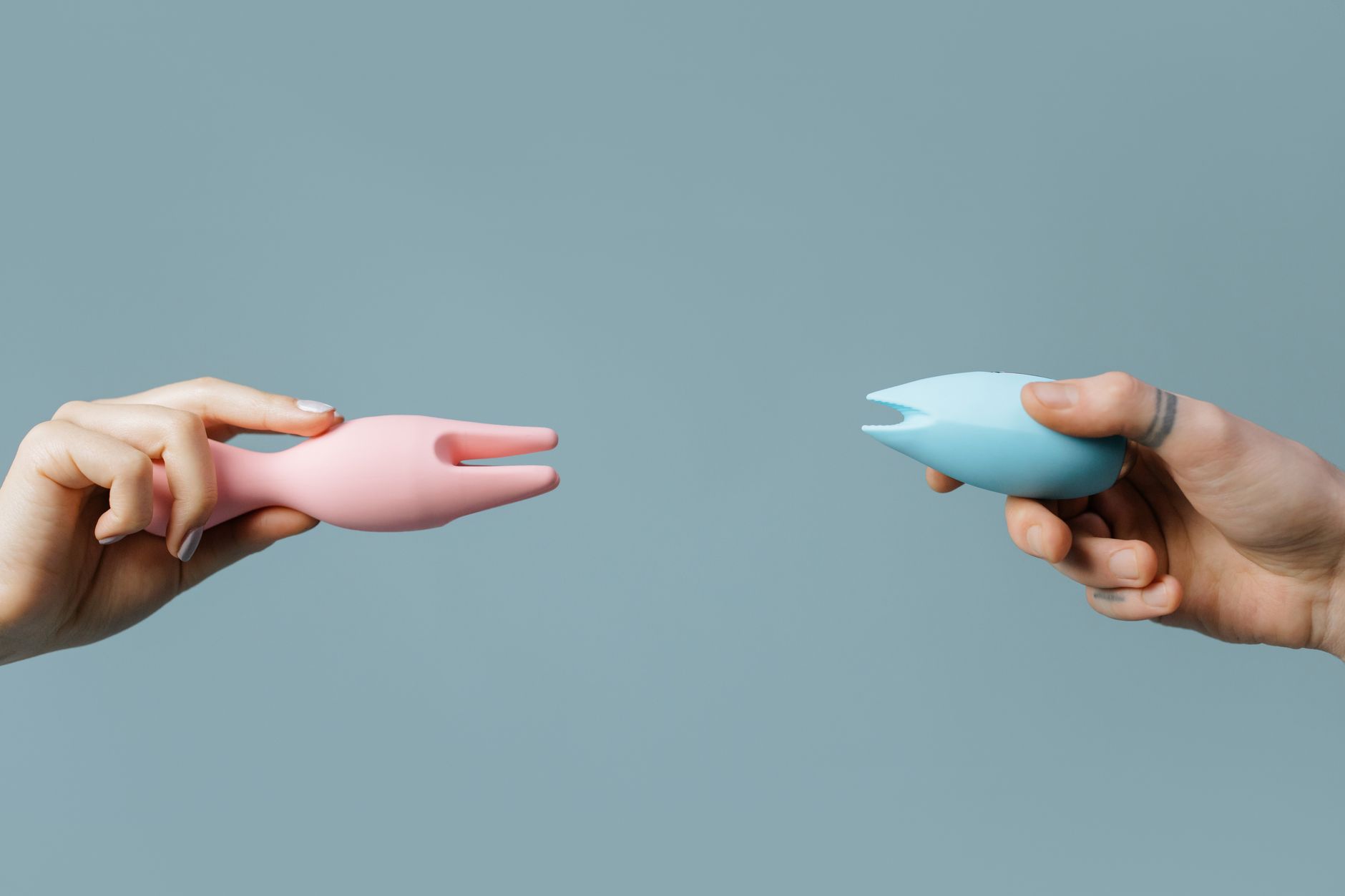
Lemon vibrators, specifically ones that use air-suction technology like the Lem, operate on a completely different principle. The suction creates a gentle pressure wave instead of direct friction. Your skin doesn't feel like it's being grabbed or rubbed. It's more like a subtle pulse drawing sensation inward. That's a neurological difference, and it matters.
The pattern is rhythmic and predictable. Once you find the setting that works, you don't have to think about it. Your nervous system gets to relax into a pattern it can anticipate, which is exactly what an overwhelmed system needs.
Starting with zero pressure
Let me be specific about what this looks like in practice.
When sensory input is high, begin with the absolute lowest setting on your lemon clitoral vibrator. Not pattern 1 at medium intensity. Pattern 1 at the lowest volume. This means your nervous system gets to meet pleasure at a volume it can actually receive right now.
Some people start by holding the vibrator near the clitoris but not making direct contact. You're hovering. You're getting the ambient sensation without the full intensity. This sounds overly cautious, but if your system is genuinely overwhelmed, this permission to go stupidly slow often means the difference between "this works" and "I'm activating my panic response again."
Your nervous system needs to learn that this object is safe before your body can relax into pleasure. That learning happens in millimetres, not in leaps.
Timing matters more than technique
Okay so here's what I notice with clients rebuilding pleasure after sensory overwhelm: they often try to reclaim their sexual self during the exact moment when their nervous system is most fried.
You've had a brutal day. You're stressed about work. Your partner wants to reconnect. So you pour a glass of wine and try to have sex, and your body goes "absolutely not." Then you feel broken.
You're not broken. Your nervous system is just following orders.
The timing of when you approach pleasure matters more than how you approach it. A lemon vibrator gives you the option to explore when you want to, not when someone else needs you to. That autonomy itself can shift your nervous system from protection mode to curiosity mode.
Try this: pick a time when you're already in a slightly regulated state. Not when you're peak-stressed, not when you're exhausted, but in that small window when you're calm enough to think straight. Morning, maybe. Or right after a walk. Or when you've actually eaten. Small things.
Building tolerance, not forcing it
I want to be really clear about something: building pleasure back after sensory overload is not about pushing through discomfort. It's about gradually expanding your window of what feels manageable.
If five minutes at the lowest setting of a lemon vibrator is all your system can handle today, that's the whole practice. Tomorrow it might be seven minutes. Next week you might try pattern 2. You're not racing toward some goal. You're just slowly signalling to your nervous system that pleasure is safe again.
When you're rebuilding sensory tolerance, consistency matters way more than intensity. Ten minutes every other day at a low setting will rewire your nervous system faster than one session where you push yourself to the breaking point.
Your brain is learning: this sensation is predictable, it's within my control, and I survive it. That learning compounds. After a few weeks of gentle practice, you'll notice that what felt overwhelming before now just feels pleasant.
The role of breathing and grounding
Your lemon clitoral vibrator does the physical work. Your breath does the nervous system work.
If you're rebuilding after overwhelm, your body is probably holding tension without you even realizing it. Your shoulders are up. Your jaw is tight. Your breathing is shallow. When you pick up the vibrator, you're adding stimulation to a system that's already locked.
Try this: before you even turn it on, take three deep breaths. Not hyperventilating breaths. Just slow, full breaths where you actually feel your ribcage expand. Then keep that breathing rhythm going as the vibrator is running. Your nervous system learns that this moment is safe because you're breathing like it is.
Some people also ground themselves by having their other hand on something texturally pleasant. A soft blanket. Their own belly. A pillow. You're creating a whole-body signal that says "I'm okay, I'm choosing this, I'm safe."
When partner involvement helps
Sometimes rebuilding sensory tolerance happens solo. That's often the fastest path because you eliminate the variable of managing someone else's needs.
But sometimes having your partner present and explicitly NOT touching you can help. You're showing them what this looks like for you. You're not performing. You're just being. They get to witness that you're rebuilding pleasure, and their job is to sit with that without adding pressure or expectation.
This only works if your partner understands that they're not the focus here. If they're watching and hoping this becomes foreplay, you'll feel that expectation and your nervous system will go back into protection mode. The point is solo reclamation in a safe space. The presence is supportive, not demanding.
If partner involvement feels like it adds pressure instead of removes it, skip this step. Solo pleasure is the entire point right now.
When lube actually makes it easier
You might think that when touch feels overwhelming, lube is irrelevant. But lubrication can actually reduce the friction signal that your nervous system perceives as threatening.
When tissue is dry, the sensation registers more sharply. Add a little water-based lube, and the same air-suction vibration from your lemon vibrator feels smoother, less intense. It's not about function. It's about making the sensation feel like something your body wants to receive.
This is especially true if you've had any history of pain during sex or touch. Your nervous system might be overly protective because it learned that unlubricated touch meant pain. Lube changes the signal.
Signs that you're ready to progress
How do you know when your sensory system has actually downregulated enough to try a little more intensity?
Look for these markers. You're looking forward to your practice session instead of dreading it. You finish and feel genuinely calm instead of depleted. You notice that what felt overwhelming last week now feels fine. You're sleeping better. Your jaw isn't clenched.
When three or four of those things are true, you can try moving up one pattern or one intensity level. Not two. Just one. Then stick with that for a week or two before moving again.
Recovering sensory tolerance is genuinely slower than building it in the first place, but it also tends to be more durable. You're rewiring your nervous system, not just muscling through.
Rebuilding your relationship with your body
Sensory overwhelm often comes with a story underneath it. "My body is broken." "I can't do this anymore." "I'm not a sexual person."
None of those things are true. Your nervous system got overloaded, and it went into protection mode. That's not a character trait. That's a survival response.
Using a lemon vibrator when touch feels overwhelming is not about forcing pleasure. It's about showing your nervous system that pleasure can happen at your pace, in your terms, with a device that doesn't demand anything from you except presence.
Over time, that experience rewires what your body believes about safety. And safety is what opens the door to pleasure.
Start small. Go slow. Trust that your system knows what it needs. If you're curious about rebuilding intimacy after longer periods of disconnection, that's a journey too. You're not alone in this.
People Also Ask
How long does it take to rebuild sensory tolerance?
It varies widely. If your overwhelm is situational (stress, exhaustion, short-term anxiety), you might see shifts in 2-4 weeks of consistent practice. If it's tied to trauma or chronic nervous system dysregulation, rebuilding can take several months. The key is showing up gently and consistently, not pushing for speed. Your nervous system will tell you when it's ready to expand.
Can I use a lemon vibrator if I have sensory processing differences?
Absolutely. In fact, people with autism or ADHD often report that the rhythmic, predictable pattern of air-suction stimulation from a lemon clitoral vibrator feels more manageable than traditional vibration. The pressure wave is less "staticky" than friction-based vibrators. Start at the lowest setting and notice what your system tells you. You get to define what works.
What if even the lowest setting feels like too much?
Then you're not ready yet, and that's fine. Sometimes the first step is just looking at the vibrator without turning it on. Next time, you hold it nearby. Next time, you hold it near your skin. You're teaching your nervous system that this object is safe through proximity before adding any sensation. Patience here pays off tenfold.
Does this work if I'm on antidepressants that numb sensation?
Yes, but differently. Antidepressants can make sensation feel muted or distant. A lemon vibrator works well here because the air-suction pattern can sometimes pierce through that numbness more effectively than traditional vibrators. That said, sensation feeling muted on medication is a separate issue worth addressing with your doctor. A vibrator is a tool, not a cure for medication side effects.
Is it normal to feel nothing for the first few sessions?
Completely normal. When your nervous system is in protection mode, it can take time before pleasure sensations register as pleasant instead of threatening. Your brain is literally rewiring how it interprets this stimulus. The absence of sensation in week one doesn't mean it won't work. It means your system is still learning that it's safe. Keep showing up.
What if rebuilding triggers anxiety instead of helping?
Stop and rest. Rebuilding sensory tolerance should feel like progress, not like forcing. If approaching pleasure creates anxiety, you might need a different starting point. Some people benefit from talking to a therapist about the overwhelm before using a vibrator at all. That's wisdom, not weakness. Your job right now is safety. Pleasure comes after.