Let's be real about antidepressants and sex
You take your medication. Your mood stabilizes. Your anxiety drops. Your life becomes manageable again. And then pleasure stops showing up. You're not broken, and your medication isn't punishing you. This is how SSRIs and SNRIs work for about 40-60% of people. The same mechanism that steadies your brain also mutes sensation, delays orgasm, or kills arousal altogether. It's one of the most common reasons people quietly quit their antidepressants. I don't want that to be your story.
The good news: sensation isn't gone. It's just quieter. And the right tools, specifically clitoral vibrators like lemon suckers, can amplify what's still there without forcing anything or making you feel broken.
What antidepressants actually do to sensation
SSRIs increase serotonin availability in your brain. That's the mechanism keeping your mood stable. But serotonin also regulates arousal, blood flow to genital tissue, and the nerve signals that create sensation. Less available norepinephrine means slower physical response. Lower dopamine can flatten desire itself, not just the feeling of it.
The result: you might notice arousal takes longer to build, orgasm feels distant or muted, or desire has simply vanished. Some people describe it as watching pleasure happen behind glass. Others say numbness. The variation depends on which drug you're taking, your dosage, how long you've been on it, and your body's individual chemistry.
Here's what matters: this is a real physiological shift. It's not in your head. It's not laziness. It's not that you need to try harder or want it more. Your nervous system is genuinely less responsive.
Why lemon clitoral vibrators work differently for medication-muted sensation
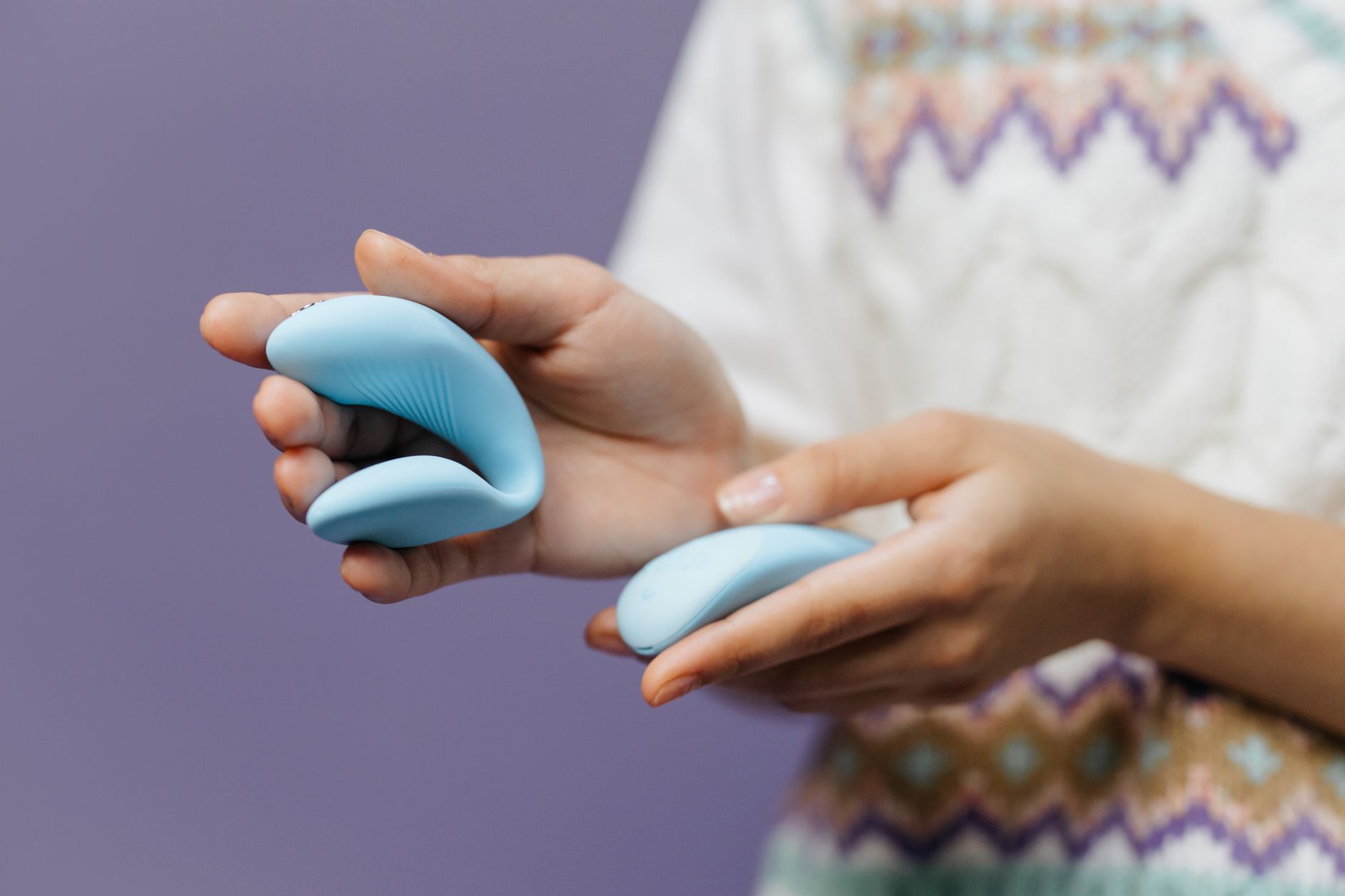
A standard vibrator buzzes. It's effective for some, but when sensation is already dampened, a regular vibrator might feel like surface stimulation, or nothing much at all. Lemon suckers and air-suction clitoral vibrators use a completely different mechanism: they create rhythmic pressure and release rather than vibration. This stimulates a different set of nerve pathways and often feels more intense and specific, even when baseline sensation is low.
Think of it this way. A vibrator sends consistent signals. A lemon sucker sends waves of suction that create a pressure-release pattern. For people whose sensation is muted, that pattern cuts through more effectively. It's like turning up the volume by switching to a different frequency rather than making the same frequency louder.
Many of my clients who've experienced antidepressant-related numbness report that air-suction devices, particularly the lemon clitoral vibrator design, were the first tools that helped them feel anything significant since starting medication. That's not coincidence. The mechanism is better matched to what your nervous system needs right now.
Starting with lower stimulation and working up
When sensation is muted, the temptation is to reach for maximum intensity immediately. Resist that. Start conservatively with your lemon vibrator or any clitoral vibrator.
Here's the protocol that works for most people:
Week 1: Exploration with no pressure for results. Use your lemon sucker on the lowest setting for 5-10 minutes. Don't try to orgasm. Don't measure success by arousal. Just notice what sensation you feel. Where do you feel it most? Is it sharp, dull, warm, cool, or something else? Many people find that even with muted sensation, specific spots on the clitoris have slightly more feeling than others. Map those out.
Week 2: Increase time, not intensity. Stay on low. Extend the session to 15-20 minutes. Your nervous system needs time to "remember" sensation. Extended time often brings more feeling than high intensity ever will.
Week 3: Introduce pattern variation. Most lemon clitoral vibrators have multiple suction patterns. Try two or three in the same session. Alternate between them. Different patterns can unlock different responses. What feels muted on one pattern might register much more on another.
Week 4 and beyond: Adjust based on what you're actually feeling. Only move to higher intensity if the lower settings genuinely feel underwhelming after consistent use. Many people find that they never need maximum intensity once they've given their nervous system time to reawaken.
The role of arousal, time, and patience
Your body might be slower to arouse right now. That's not a problem you need to solve fast. It's context you need to honor.
Build in 20-30 minutes before you use your lemon vibrator. Read something that interests you erotically. Think about something that used to spark desire. Watch something that engaged you before medication. Move your body. The goal isn't instant arousal. It's creating the mental conditions where sensation can rise to meet you.
When you finally use your clitoral vibrator, think of it as an amplifier for whatever arousal exists, not a substitute for it. If you've spent 10 minutes building mental interest and your body still feels flat, the lemon sucker isn't failing. Your nervous system is just slower to respond right now. That's temporary, but it needs time.
Patience with your body is the hardest part of this. I know. But it's also the most valuable.
Lubrication matters more than you think
When sensation is already muted, friction becomes noticeable in unhelpful ways. A water-based lubricant transforms the experience by letting your lemon clitoral vibrator glide smoothly rather than tug. This reduces surface friction and lets the suction mechanism work more effectively.
Apply lube directly to the lemon sucker head, not just to your skin. You want a thin consistent layer. Reapply halfway through if it dries out. This one detail shifts many people from "I feel almost nothing" to "oh, now I feel that."
If you find that sensation returns and intensifies as you practice, lube also prevents overstimulation. As your nervous system reawakens, direct sensation can become intense. Lubrication is how you dial it back without stopping.
Communication if you have a partner
Antidepressants create a paradox. They're keeping you mentally stable, which means you're more present and capable in relationships. But they're also flattening the sexual aspect of those relationships. A partner might interpret slower arousal or muted orgasm as lack of interest in them, not as a medication side effect.
Separate those two conversations completely. One is: "My medication is affecting my physical sensation, and I'm working through it with tools that help my body respond." The other is: "I love you, I'm attracted to you, and I'm committed to rebuilding this part of our connection."
If your partner wants to be involved, a lemon vibrator can be a shared tool. Some partners feel less threatened or inadequate when they understand that the tool is addressing a nervous system shift, not replacing them. Others prefer to give you privacy and space to reconnect with your own sensation first. Both are legitimate.
The key is clarity: your slower arousal is not a referendum on your partner's attractiveness. It's a medication side effect you're actively managing.
When to talk to your doctor
If sensation hasn't improved after 6-8 weeks of consistent use of your lemon clitoral vibrator, or if desire has completely evaporated (not just pleasure, but wanting pleasure at all), mention it to your prescriber. You have options.
Some doctors adjust timing: taking the medication at night instead of morning, or taking a drug holiday one day per week. Others switch you to a different SSRI or add a medication that counteracts sexual side effects. Bupropion, for example, can be added to SSRIs specifically to restore sensation and desire. None of these decisions require you to abandon antidepressants entirely.
Your mental health medication is non-negotiable. But the sexual side effects don't have to be permanent, and your doctor wants to know if you're struggling.
The timeline for sensation to return
Some people notice shifts in weeks. Others take months. A few find that sensation is durably muted even with intervention, and they have to rebuild pleasure on slightly different terms. That's all okay.
What's not okay is suffering in silence or assuming this is permanent. It usually isn't. But it does require you to show up for yourself with the same consistency that you take your medication.
Use your lemon sucker regularly. Notice small changes. Be patient. Talk to your partner if relevant. And absolutely tell your doctor if nothing's shifting. You deserve pleasure and mental stability. You don't have to choose between them.
FAQ
Can I use any clitoral vibrator if I'm on antidepressants, or do suction toys work better?
Any clitoral vibrator is better than nothing, but suction-based designs like lemon suckers tend to cut through medication-related numbness more effectively than traditional vibrators. The pressure-release pattern is often more noticeable when baseline sensation is low. That said, the best toy is the one you'll actually use consistently. If you prefer a different style, start there and adjust intensity down to match your current sensation level.
How long should I wait after starting antidepressants before trying to restore sensation?
Wait at least 2-4 weeks for the medication to reach steady state in your system. Then give yourself another 2-4 weeks to notice what your baseline sensation actually is. Many people panic too early and assume permanent numbness when it's just the adaptation period. Once you know your baseline, that's when tools like your lemon vibrator become most useful.
Will using a clitoral vibrator eventually make me need it to feel anything at all?
No. That's a common worry, but stimulation from a vibrator (or suction toy) doesn't create dependency in the way people fear. If anything, consistent gentle stimulation helps your nervous system remember how to respond, which can make partnered touch feel more alive again, not less. The worry comes from conflating pleasure tools with medication tolerance. They're different mechanisms entirely.
What if I don't feel anything even with my lemon clitoral vibrator after a month?
Talk to your doctor. It's possible your dosage is too high, the wrong medication for your body, or that you need an additional medication to counteract sexual side effects. It's also possible you need more time. But a month of consistent use with no improvement is worth professional conversation, not resignation.
Can antidepressant-related numbness go away on its own?
Sometimes. As your body adjusts to medication, some sensation naturally returns. Other times it doesn't without intervention. The variation depends on the drug, your dosage, and your individual neurobiology. Adding a tool like a lemon sucker speeds up that return in most cases, but professional support (from your doctor) is necessary if numbness persists.
Is it normal to need a toy when I didn't before antidepressants?
Completely normal. Your nervous system is in a different state. That doesn't mean you're broken or dependent on the toy forever. It means you're adapting to a new medication reality and using the right tool for right now. As sensation returns, you might find you need the toy less, or you might keep using it because it works. Either outcome is fine.
What comes next
Antidepressants save lives. They keep you stable. They give you space to work, love, and show up. If they're also muting sensation, that's not the price of staying sane. That's a manageable side effect. A lemon clitoral vibrator or any air-suction tool is one part of reclaiming pleasure. Time, patience, conversation with your doctor and partner, and consistent practice with the right tool are the other parts.
You don't have to choose between mental health and sexual pleasure. The two can coexist. It just takes the right information and the right approach to get there.
If you're struggling to navigate medication side effects and intimacy, let's talk. Reach out anytime.