Here's the mismatch nobody talks about
One of you reaches for pattern 5 on the Lem. The other one flinches at pattern 2. You're trying to use the same toy together, and what feels amazing to one person makes the other person tense up. This isn't a sign something's wrong with either of you. It's actually incredibly common, and it's fixable.
Mismatched clitoral sensitivity between partners is one of the most frequent relationship obstacles I see that couples never name out loud. You end up navigating around it instead of through it. Someone compromises quietly. Someone feels a little unseen. The toy sits in the drawer.
Why sensitivity levels actually differ
Your clitoris has about 8,000 nerve endings concentrated in a tiny space. But the density of those nerves, the nerve fiber thickness, and how quickly they fire varies wildly from person to person. It's not better or worse. It's just neurological wiring.
Age, hormonal cycles, medications, and past physical experiences all shape sensitivity too. If one partner is on antidepressants and the other isn't, their baseline sensation threshold is different. If one person has gone through significant health changes and the other hasn't, their comfort with intensity shifts independently.
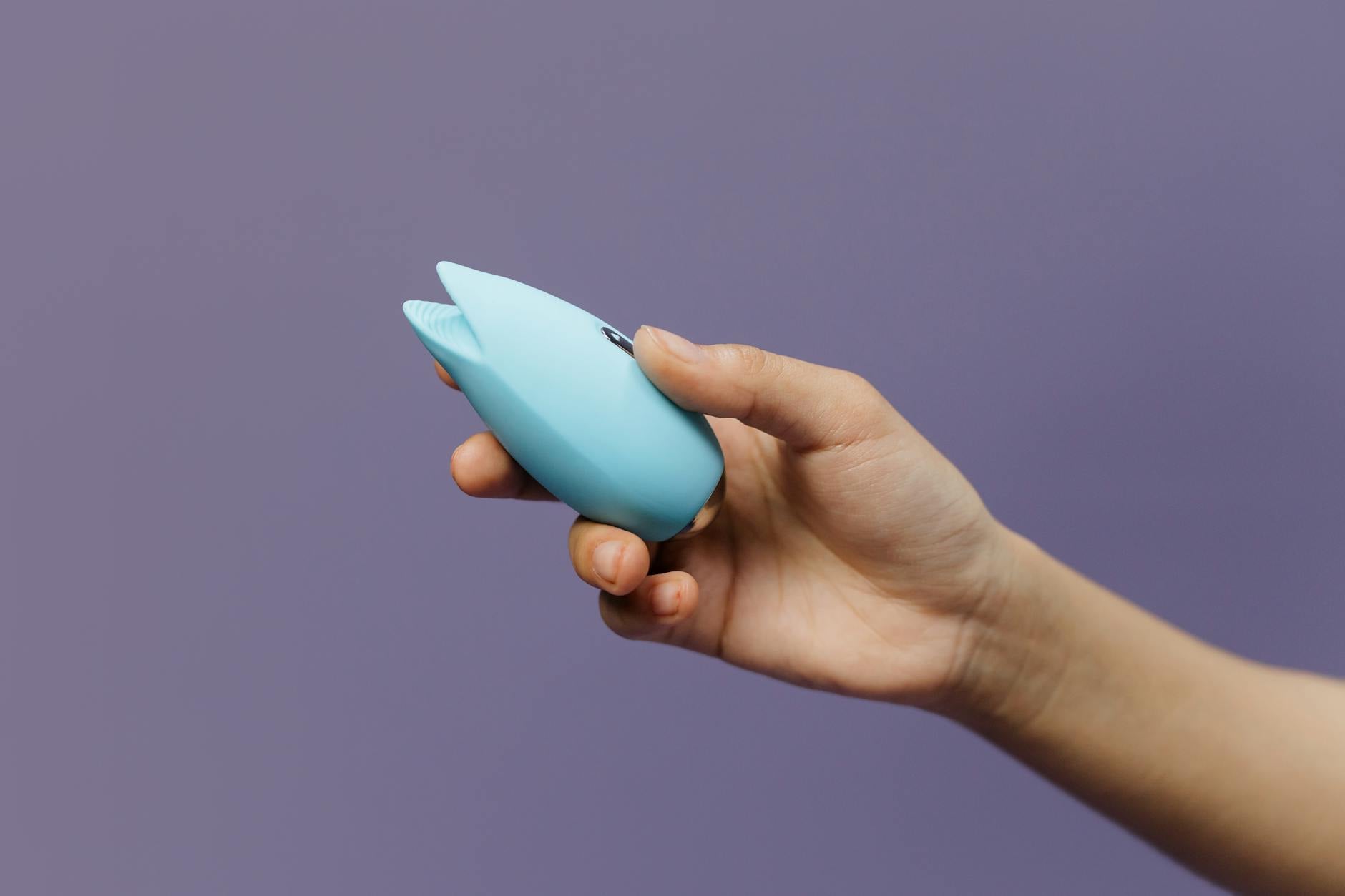
Here's the part that matters for couples: this doesn't mean one person is broken or too sensitive or not sensitive enough. It means you need different settings. That's all. And the Lem, with its eight intensity patterns and two stimulus modes, is specifically designed to solve this.
The communication setup that actually works
Before you even turn the toy on together, you need one conversation. Not during sex. Not in the moment. A regular talk, maybe over coffee, where you acknowledge that your bodies are different and that's okay.
Here's what I recommend saying: "I notice we might like different intensity levels. I want us both to feel amazing when we use this together. Can we figure out what works for each of us?"
That's it. You're not diagnosing anything. You're not making anyone feel weird. You're just naming the obvious and committing to solving it together.
Then ask each other directly: "What intensity level feels best for you solo?" Or: "Is there a pattern on here that makes you tense up?"
People with higher clitoral sensitivity often benefit from the gentler suction-based approach the Lem provides, especially on lower settings. People with lower sensitivity thresholds might gravitate toward the stronger suction mode or the higher intensity patterns. Knowing where you both land takes the guesswork out of partnered use.
The practical setup for shared play
There are three ways to navigate this with a lemon vibrator:
1. Take turns setting the intensity
Start with whoever prefers lower intensity. You spend five to ten minutes at their preferred setting. Yes, really. Then hand it over and switch to the setting your partner loves. The person who started at lower intensity can usually build up to higher settings after they're already aroused. Sensitivity isn't fixed. It changes as you warm up.
This isn't boring for the other person. You're still in it together. You're just giving both of you what you actually need instead of meeting somewhere in the middle that doesn't quite work for anyone.
2. Use the two-mode advantage
The Lem has a suction mode and a pulsation mode. One partner might prefer the softer suction approach, while the other loves the rhythmic pulsing. You don't have to compromise on intensity. You can compromise on sensation type instead. This is less about one person "waiting their turn" and more about customizing the experience to what your nervous systems actually respond to.
3. Start lower, build together
Begin at a setting that feels gentle for the more sensitive partner. Then, over several minutes, gradually increase the intensity together. What felt intense at pattern 2 doesn't feel the same once you're both at pattern 4. Arousal changes sensation. Anticipation changes sensitivity.
This only works if you're communicating in real time. Soft check-ins. "Still good?" "Want me to go higher?" "Tell me if this stops feeling right."
When one partner is way more sensitive
Let's get specific about the harder case: one person is highly sensitive and even the lowest setting sometimes feels like too much. The other partner likes stronger intensity.
First, make sure the sensitive partner knows this isn't a flaw. I've worked with couples where the more sensitive person felt broken. They're not. They just have a narrower window of "good sensation," and that's navigable.
Here's what helps: longer warm-up, water-based lubricant (it changes how the suction feels), and potentially using the toy on areas just around the clitoris instead of directly on it at first. Many people who think they're "too sensitive" actually just need a different approach to stimulation, not absence of stimulation.
Second, stop trying to make them enjoy the same intensity as you. That's like asking someone to enjoy spicy food because you do. It's not going to work, and the effort is exhausting for both of you.
Instead, use the toy in ways that satisfy both of you: they can use the Lem at their preferred setting while you use a different toy, or you can use the Lem on them at low intensity while they use something else on you. This isn't separate. You're still together, still intimate, still connected. You're just acknowledging that your bodies need different things.
The confidence piece that changes everything
Most couples avoid this conversation because someone worries it means their partner doesn't want them. That's the real issue underneath the sensitivity mismatch. "If you don't like the same intensity I do, does that mean you don't like how my body feels?"
The answer is no. Completely, unequivocally no. Sensitivity differences are about nerve density, not desire.
When you move past that fear and start actively solving for both of you, something shifts. You stop performing pleasure for each other and start building it together. The person with lower sensitivity stops feeling guilty. The person with higher sensitivity stops feeling delicate. You both feel seen, accommodated, and prioritized.
That's when partnered toys actually work. Not when you're both pretending to like the same setting. When you're both getting what you need and you're both confident that's the whole point.
FAQ: Real questions, real answers
Can clitoral sensitivity change between partners?
Yes, absolutely. The same person might have higher sensitivity in one relationship and lower in another. This often comes down to comfort, trust, and arousal level. If you're relaxed and present, your sensitivity threshold usually expands. If you're anxious, it narrows. So sensitivity isn't just physical. It's also about the emotional safety you feel with this specific person.
Is one person being "too sensitive" a sign of a problem?
Not medically. Higher sensitivity is not a disorder. It's neurological variation. That said, if someone is consistently experiencing pain during stimulation (not just discomfort from high intensity, but actual pain), that's worth discussing with a doctor. But preference for gentler sensation? That's just preference.
Should I feel bad if I need lower intensity than my partner?
No. Your body isn't apologizing for itself. Neither should you. The goal isn't to match your partner's preference. It's to both feel good. You can absolutely do that with different intensity levels.
What if my partner thinks I'm not into them because I prefer lower intensity?
Tell them directly. "I love your body. I'm just wired to enjoy gentler sensation. It's about my nerves, not about my desire for you." Then show them that you're actively choosing to use a toy together anyway, even though you're taking different paths through it. That's the opposite of not being into someone. That's saying: I want this with you badly enough to figure out how to make it work.
Can you train yourself to enjoy higher intensity?
Sometimes. Gradual exposure can help expand your comfort zone. But there's a limit. You can't rewire your nervous system. Some people will always prefer gentler sensation, and that's not something to fix. It's something to honor and work around.
Should we get two separate toys instead of sharing one?
You could. But many couples find that a toy with multiple intensity settings and modes (like the Lem) actually solves the problem more elegantly. You're still using one thing together, still in the same moment. You're just adjusting how you experience it. Plus, it's practical. Fewer toys to store, fewer things to manage. The settings do the work for you.
The bottom line
Different clitoral sensitivity between partners isn't a relationship problem. It's a logistical detail you solve once and then move past. The conversation takes twenty minutes. The adjustment takes one or two tries. Then you're both having better sex because you're both actually getting what your bodies need.
Most couples never have this conversation because they think mismatched sensitivity means something's wrong. It doesn't. It just means you get to be thoughtful and intentional about how you build pleasure together. That's not a burden. That's an advantage.
Want to go deeper?
If communication around pleasure feels harder than it should, that's worth exploring. Many couples would benefit from talking through desire, sensitivity, and what turns them on with support. Reach out to Hello Nancy if you'd like to chat about building more connected intimacy with your partner.