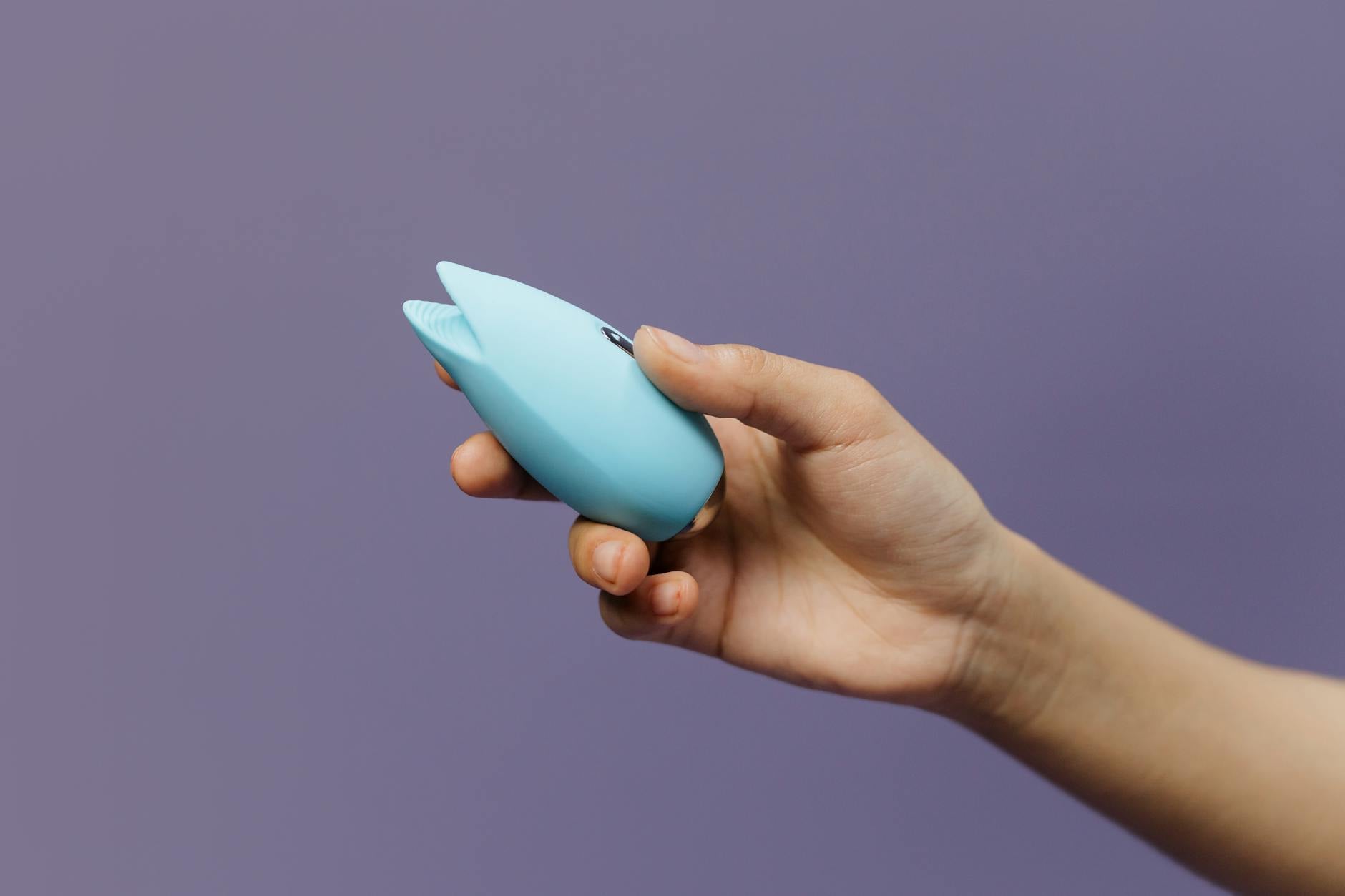
How to Use a Lemon Vibrator After Postmenopause When Hormonal Shifts Peak
Let's be real: postmenopause isn't a dimmer switch. It's a complete rewiring of how your body responds to touch, arousal, and pleasure. But rewiring doesn't mean breaking. It means learning a new map.
If you've stepped into postmenopause in the last few years, you've probably noticed that sensation feels different. What used to happen in five minutes now takes twenty. Intensity that once felt perfect now borders on too much. Dryness showed up as an unwelcome guest. And somewhere in all of that, you might have wondered if this is just how it is now. Spoiler: it isn't. You just need different tools and a different strategy. Lemon clitoral vibrators, specifically the Lem, work remarkably well during this phase of life because they're designed for exactly this kind of tissue sensitivity.
Here's what I see in my practice: people who embrace the postmenopause shift often discover their most satisfying orgasms happen now. Not in their twenties. Not in their forties. After. That's not consolation language. That's a clinical observation I've watched play out dozens of times.
What postmenopause actually does to your body
Estrogen doesn't just drop. It bottoms out. This changes tissue thickness throughout your vulva and vagina. The clitoral glans, which has some of the highest nerve density in your body, becomes more exposed and often more sensitive to direct friction.
Your vaginal tissue thins. It produces less natural lubrication. The pelvic floor loses estrogen support, which can change how pelvic floor contractions feel during orgasm. Orgasms might feel more localized instead of full-body. They might be shorter or more concentrated.
What doesn't change is this: you still have all the neural pathways for arousal. Your clitoris still has all its nerve endings. Your brain still lights up the same way during pleasure. The capacity is there. The wiring is intact. What's different is the equipment. And once you understand that, you can work with it instead of against it.
Why sensation intensity shifts (and what to do about it)
Tissue sensitivity during postmenopause operates on a weird paradox: you're simultaneously more sensitive and less responsive. The tissue is thinner, which means nerve endings are closer to the surface. Direct stimulation can feel sharper. But at the same time, arousal takes longer to build, and the tissue needs more preparation time.
This is where lemon clitoral vibrators change everything. Air-suction technology, which is what Hello Nancy's Lem uses, works differently than traditional vibration. Instead of direct friction, it creates a gentle suction that stimulates the clitoral tissue from the outside without the mechanical pressure that can feel too intense on thinner tissue.
For postmenopausal bodies, this is specific gold. You get deep stimulation without the friction burn or overstimulation. The sensation is more of a pulling, drawing feeling rather than a buzzing one. Many of my clients report that the Lem produces their strongest orgasms since perimenopause ended, precisely because it doesn't fight the tissue. It works with it.
Starting over with arousal timing
Arousal during postmenopause is slower by design. You can't rush it, and honestly, once you stop trying, it becomes pleasurable in itself.
Budget 20 to 30 minutes before you introduce any toy. Spend the first 10 minutes with touch alone. Your skin still has all its touch receptors. Hands, mouths, attention. Let blood flow to the area gradually. This isn't foreplay in the old sense. It's the thing itself.
When you bring in the Lem, start at the lowest setting. Patterns 1 through 3 are your friends. Most postmenopausal users find that what felt like underwhelming stimulation in their forties now builds into deep, sustained arousal. You're learning a slower crescendo.
One more thing: your body might also need more direct lubrication support now. Water-based lubricant isn't a sign of dysfunction. It's a tool that extends comfort and sensation. Use it freely. Your tissue will thank you.
The mental shift that matters more than the physical one
Here's what I notice with many of my clients who hit a pleasure wall during postmenopause: they're grieving. They're grieving the body they had, the speed of their response, sometimes the version of sex they had with their partner when everything was faster and easier.
That grief is real and worth feeling. But it often masks something else: permission. For the first time in decades, many people find that the social pressure to perform, to be ready on command, to fit into someone else's timeline, has lifted.
Postmenopause is often the first time people explore their own pleasure on their own terms. They're not timing it around a partner's desire. They're not managing someone else's ego. They're not worrying about fertility or contraception or whether they're taking too long.
This mental shift is as important as any physical change. Solo pleasure with a lemon clitoral vibrator during this phase isn't compensation for something lost. It's often the beginning of something more intentional.
If you're partnered, this is worth naming. "My body is responding differently" is a neutral statement. It's not "I'm less attracted to you" or "Something's wrong with me." It's information. It opens a conversation about what you both need now.
Lubrication, tissue prep, and comfort baselines
Water-based lube is non-negotiable during postmenopause, regardless of your toy choice. Here's why: thinner tissue is more prone to micro-tears from friction, and lube prevents that. It also extends sensation. Sex doesn't feel dry or uncomfortable. It feels rich.
Apply lube generously. More than you think you need. Reapply as needed during longer sessions. Your tissue might also benefit from a hydrating vaginal moisturizer used daily or a few times a week, separate from sexual activity. This supports tissue health overall.
Before introducing the Lem, spend time with your hands. Explore what intensity you're actually craving. Sometimes we think we want what we wanted at 35. We don't. We might want something more subtle, more sustained, different entirely.
Start the Lem at the lowest setting. Let it run for 30 seconds, then pause. Notice. Try a different pattern. Notice again. This isn't lazy. This is data collection. You're learning your new body.
When sensation changes become physical problems
Theres a difference between "sensation feels different" and "I'm in pain." If pain appears during sex, see a gynecologist who understands postmenopause. Genitourinary syndrome of menopause, or GSM, is real and hugely treatable. Topical estrogen creams often work within weeks.
Similarly, if you've lost all desire and it's not returning, hormone therapy is worth discussing with a doctor. Testosterone therapy is conservative in some regions but available and often transformative for the right person.
If you're having trouble with orgasm after trying these strategies for two or three months, talk to your doctor. Sometimes medication side effects, blood pressure changes, or other health shifts mask as a pleasure problem.
The FAQ that everyone asks
Can I still have multiple orgasms after postmenopause?
Absolutely. The timeline might be different. You might need a break between orgasms, or you might find them stacked differently than before. But the capacity is there. Some of my clients report that postmenopausal multiple orgasms feel more intense than they ever did, because they're not rushed and the arousal is more intentional.
How much lubrication is actually enough?
More than feels necessary. Thinner tissue benefits from a generous coat. Most people underapply at first. Once you go heavier, you realize how much smoother everything feels.
Does the Lem work the same way on postmenopausal tissue as it does on younger tissue?
It works better. The suction mechanism is gentler than traditional vibration, which is exactly what thinner, more sensitive tissue needs. Younger users love it for intensity. Postmenopausal users love it because it doesn't feel sharp or uncomfortable.
What if I've lost interest in partnered sex but still have desire?
That's common and worth exploring separately from your body's changes. Sometimes our partners haven't adjusted to the new timeline either. Sometimes we're grieving something else entirely. A coach or therapist can help untangle that.
Is there a "right" amount of time I should spend building arousal?
There's no right. There's your right. Some people find 15 minutes enough. Others need 30. Honor what your body is asking for instead of trying to match an old schedule.
Should I be using hormone therapy before trying a toy like the Lem?
They work together, not as either/or. If you're on hormone therapy, the tissue support helps. If you're not, lube and patience become more important. The Lem works well either way.
What happens next
Postmenopause is not the end of your sexual life. It's actually the second act. The first act was learning your body within the context of fertility, hormonal cycles, and social expectations. The second act is learning it on your own terms.
That might look like exploring lemon vibrators for the first time. It might look like reconnecting with a partner on new terms. It might look like solo pleasure that's deeper and more intentional than anything that came before.
Your body has changed. Your capacity for pleasure hasn't. It's just demanding something different now: patience, presence, better tools, and permission to take the time you need.
If you're curious about how a clitoral vibrator might fit into your postmenopause pleasure practice, start with the Lem. It's designed specifically for the sensitivity and tissue changes you're navigating. Learn more about it, or reach out to our team if you have questions about what might work for your body at this stage of life.
Your pleasure matters. It matters more now than it ever did. Treat it that way.