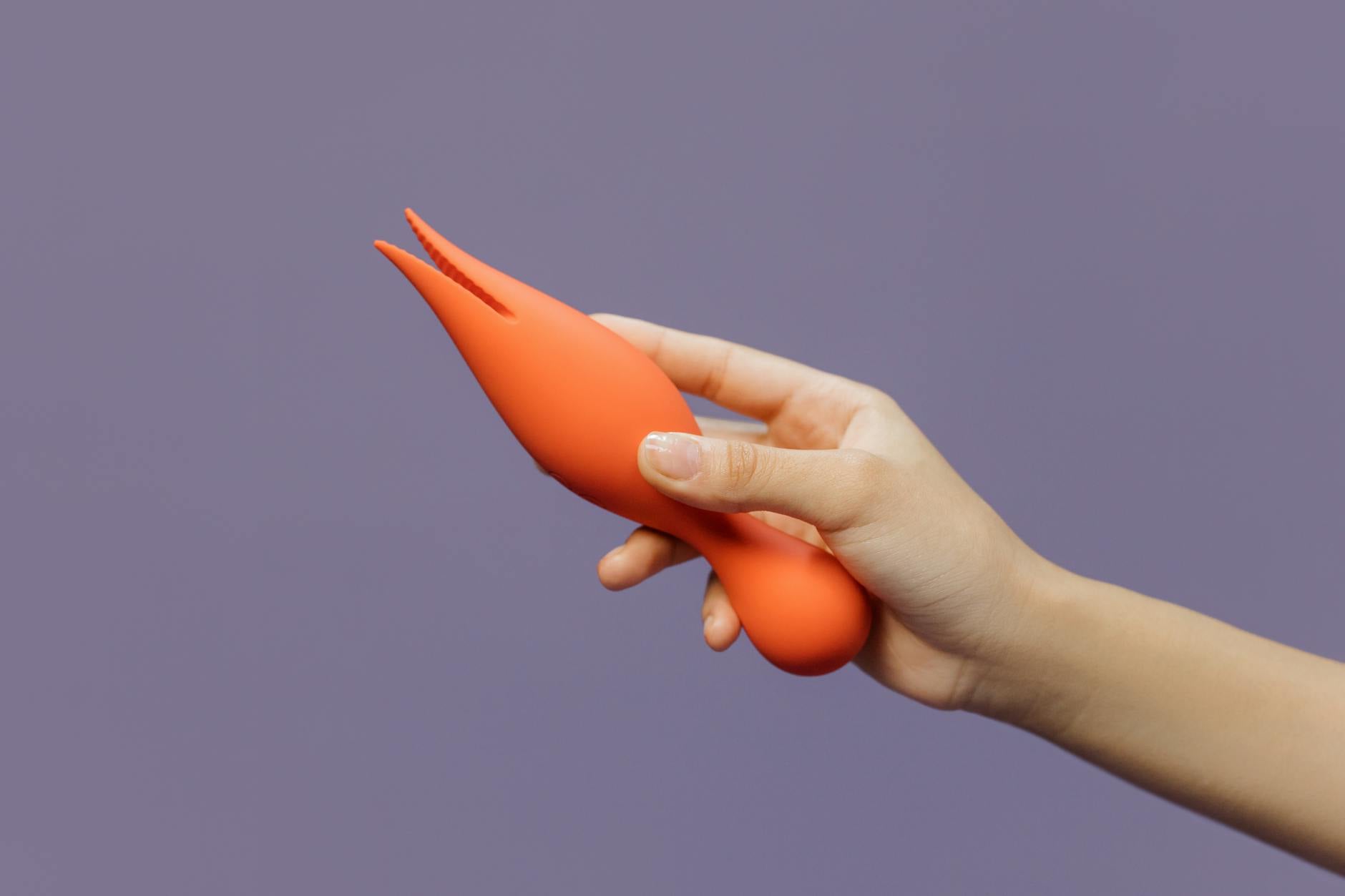
How to Use a Lemon Vibrator When You Want to Rebuild Desire After Grief
Let's be honest: grief kills desire. Not forever, but absolutely in the moment. When you're processing loss, your nervous system is in survival mode. Arousal feels selfish, impossible, or just completely absent. Your body forgets how to want things.
The good news? That numbness is temporary. And when you're ready to reconnect to pleasure again, a lemon vibrator can be a surprisingly effective tool. Not as a way to "fix" your grief, but as a way to gently remind your body that sensation and joy are still available to you.
Why grief numbs pleasure in the first place
This isn't in your head. When you're grieving, your amygdala (the brain's threat-detection center) is hyperactive. Your body is flooded with cortisol and adrenaline. Meanwhile, the prefrontal cortex (the part that handles complex emotions, creativity, and pleasure) goes quiet. Your nervous system is protecting you by narrowing focus to survival.
Sexual arousal requires the opposite state. It needs a calm nervous system, safety, and a release of responsibility. So it makes total sense that desire disappears when you're grieving. Your brain isn't broken. It's doing exactly what it evolved to do.
The neural pathways for pleasure don't vanish, though. They just get quiet. And they can be coaxed back to life.
The difference between grief suppressing desire and depression killing it
Here's an important distinction. Grief that's happening without depression is different from grief complicated by depression. In straightforward grief, desire can return relatively quickly once the acute shock passes. In grief plus depression, desire stays absent longer, and medication changes (which often numb arousal) can compound the problem.
If you've been grieving for months and desire still feels completely absent, especially if other things also feel pointless or heavy, it's worth talking to your GP. Grief support and depression support aren't the same thing, and you might need both.
That said, even when you're still in the depths of it, pleasure isn't completely off-limits. It just needs permission and gentleness.
Why a lemon vibrator is different from partnered sex
When you're grieving, partnered sex often feels like too much. There's the expectation to be present and responsive. There's the fear of "proving" you're okay when you're not. There's the guilt of feeling good when the person you loved is gone. A clitoral vibrator like the Lem removes most of that friction.
With a vibrator, you're not performing. You're not checking in with someone else. You're not proving anything. You're just exploring what your body can feel, at your own pace, alone or alongside a partner without pressure.
The Lem in particular is useful here because it uses gentle suction and pulsing rather than direct vibration. It can feel less intense, less jarring, and more like a soft invitation than a demand.
Starting small: the first sessions back
Don't expect the first time to feel amazing. That's not the goal.
Start with one clear boundary: you're not trying to orgasm. You're trying to notice sensation. There's a huge difference. Orgasm is a goal, a finish line, a performance metric. Sensation is just information. Your body saying, "I can still feel that. I remember what that's like."
Set aside maybe 15 minutes when you're alone, rested, and not pressured by time. No candles, no pressure. Just you and the vibrator. Start the Lem on the lowest setting, and if even that feels too much, use it over clothing at first.
Let yourself feel bored. Let yourself feel neutral. Let yourself not feel anything much. None of that is failure.
The role of grief waves and timing
Some days you'll be ready. Some days you won't. This is normal. Grief isn't linear, and your capacity for pleasure will fluctuate with your grief waves.
On days when the loss feels fresh again, pushing yourself to feel pleasure can backfire. It can feel like betrayal, like you're moving on too fast, like you don't deserve to feel good. Listen to that voice. Skip the session. Come back when you feel more grounded.
On days when the ache loosens a little bit, when you have a moment of not-thinking about the loss, that's when reaching for the vibrator might feel right. You'll know.
Building a gentle routine
Once you've had a few sessions where sensation feels possible, you can start to build something more intentional. This isn't about chasing orgasms. It's about creating a practice of reconnection.
Some people find it helpful to combine this with breathwork. A few slow, deep breaths before you start. Nothing mystical, just a way to tell your nervous system "we're safe now, we can feel good." Others find it helps to have a ritual: a specific time, a specific place, a specific thing you do before.
The point isn't the ritual itself. The point is that your brain starts to associate this time and place with permission to feel good. Permission is what grief takes away. A routine helps rebuild it.
When pleasure feels like guilt
This is the part nobody talks about. You start to feel something good, and immediately your brain says, "But they're dead. What right do I have to feel pleasure?"
That guilt is real and it's common. And it's worth sitting with, rather than pushing through. In a sense, your partner or loved one isn't being erased by your pleasure. Your pleasure is a sign that you're still here, still alive, still willing to feel. That's not a betrayal. That's survival.
If the guilt becomes overwhelming, it's worth exploring with a grief counselor or therapist. Sometimes guilt during grief is something to move through. Sometimes it's pointing to something deeper that needs attention.
Reconnecting with a partner after grieving
If you're rebuilding desire after grief while also in a relationship, things get more nuanced. Some partners feel rejected when you're grieving and desire disappears. Some want to be supportive but don't know how. Some have their own grief happening at the same time.
Using a lemon vibrator solo isn't a substitute for that conversation. But it can be useful preparation for it. When you've reconnected with your own pleasure, you have something to bring back to the partnership. You can say, "I'm starting to feel something again. I'm not ready for X, but Y might work." That's a conversation from a place of yes, not a conversation from a place of obligation or numbness.
Some couples find it helps to use a vibrator together as part of rebuilding. The Lem is small and unintimidating enough that it doesn't have to feel like a huge production. It can just be part of touching each other again.
The difference between numbness and taking your time
There's a point where you need to gently push back on grief numbness, not to make the grief go away, but to make sure you're not just numb to everything. If you haven't felt any sensation, desire, or pleasure in more than a few months, and if other things also feel flat and pointless, that's worth mentioning to a professional.
But if you're rebuilding gradually, if some days you can feel joy alongside the sadness, if you're slowly remembering that your body can feel good, then what you're doing is grief recovery. And a vibrator is a perfectly reasonable tool for that.
When to reach out for more support
A vibrator is not a substitute for grief counseling. But it can be part of a larger healing picture. If you're using it as a way to gently reconnect to pleasure, that's one piece. Grief support, talking about the loss with people who understand it, possibly antidepressants if grief has tipped into depression, other rituals and practices that honor the person you've lost: all of that matters too.
Reach out to a grief counselor or therapist if pleasure stays absent for longer than a few months, if guilt about pleasure becomes paralyzing, or if you're struggling to function in other areas of life. Grief isn't something you have to white-knuckle through alone.
The long game
Healing from grief doesn't mean the grief goes away. It means the grief gets smaller and quieter and shares more space with other feelings. Pleasure, joy, desire, laughter. The loss stays real and important, but it stops being the only thing your nervous system can feel.
A lemon vibrator isn't magic. But it can be a gentle signal to your body that it's okay to feel good again. That pleasure and loss can coexist. That you're still here, still alive, still capable of sensation and joy.
Start small. Be patient with yourself. Some days will feel easier than others. That's exactly how it should be.
People also ask
Is it normal to have no desire after someone dies?
Completely normal. Grief activates your threat-detection system, which suppresses desire as part of survival mode. Your nervous system is protecting you. Desire typically returns as the acute shock of the loss passes and your system starts to calm down. If it stays absent for months alongside other flatness, that might be depression layered on top of grief, and it's worth checking in with someone.
How long does it take to feel pleasure again after grief?
It varies widely. Some people feel little flickers of pleasure within weeks. Others take months. There's no "right" timeline. The only concerning timeline is if months pass and pleasure stays completely absent while everything else also feels pointless and heavy. That's more likely depression, and antidepressants or therapy might help alongside grief processing.
Can using a vibrator during grief feel like I'm not respecting the person who died?
That guilt is real and common, but pleasure isn't a finite resource that belongs to someone else. Your willingness to feel good again is actually a kind of resilience. It's your body saying you want to stay alive, stay present, stay engaged with the world. That's not disrespect. That's survival.
Should I tell my partner I'm using a vibrator to rebuild desire after grief?
It depends on your relationship. Some couples find it helps to explore together or at least know what's happening. Some people need privacy during that reconnection process and bring the insights back to the partnership later. There's no wrong answer, but lying or hiding tends to backfire. If you're in a committed relationship, honesty and conversation tend to go better than secrecy.
What if I use a vibrator and still feel nothing?
That's okay. Your body might not be ready yet. Grief unfolds on its own timeline. If nothing feels possible, try putting the vibrator away for a few weeks and come back to it later. The goal isn't to force feeling. The goal is to gently explore when your nervous system is ready.
Is it wrong to want pleasure with a partner again after losing someone?
No. Your life didn't end when theirs did. You're still here. You still deserve connection, touch, and pleasure. Those desires aren't disloyal to the person you lost. They're a sign that you're continuing to live, and that's not just okay. That's necessary.
Rebuilding desire after grief is tender work. There's no rush, no metric of success, no finish line. A lemon vibrator is just one small tool in a much larger process of healing. Be gentle with yourself. Your body is doing exactly what it needs to do, and when it's ready to feel pleasure again, that pleasure will be real and earned and deeply worth having.
If you're struggling with the emotional side of grief or rebuilding intimacy in a relationship, consider speaking with a therapist or counselor. Reach out to Hallo Nancy Lemons if you have questions about how a vibrator might fit into your personal healing journey.