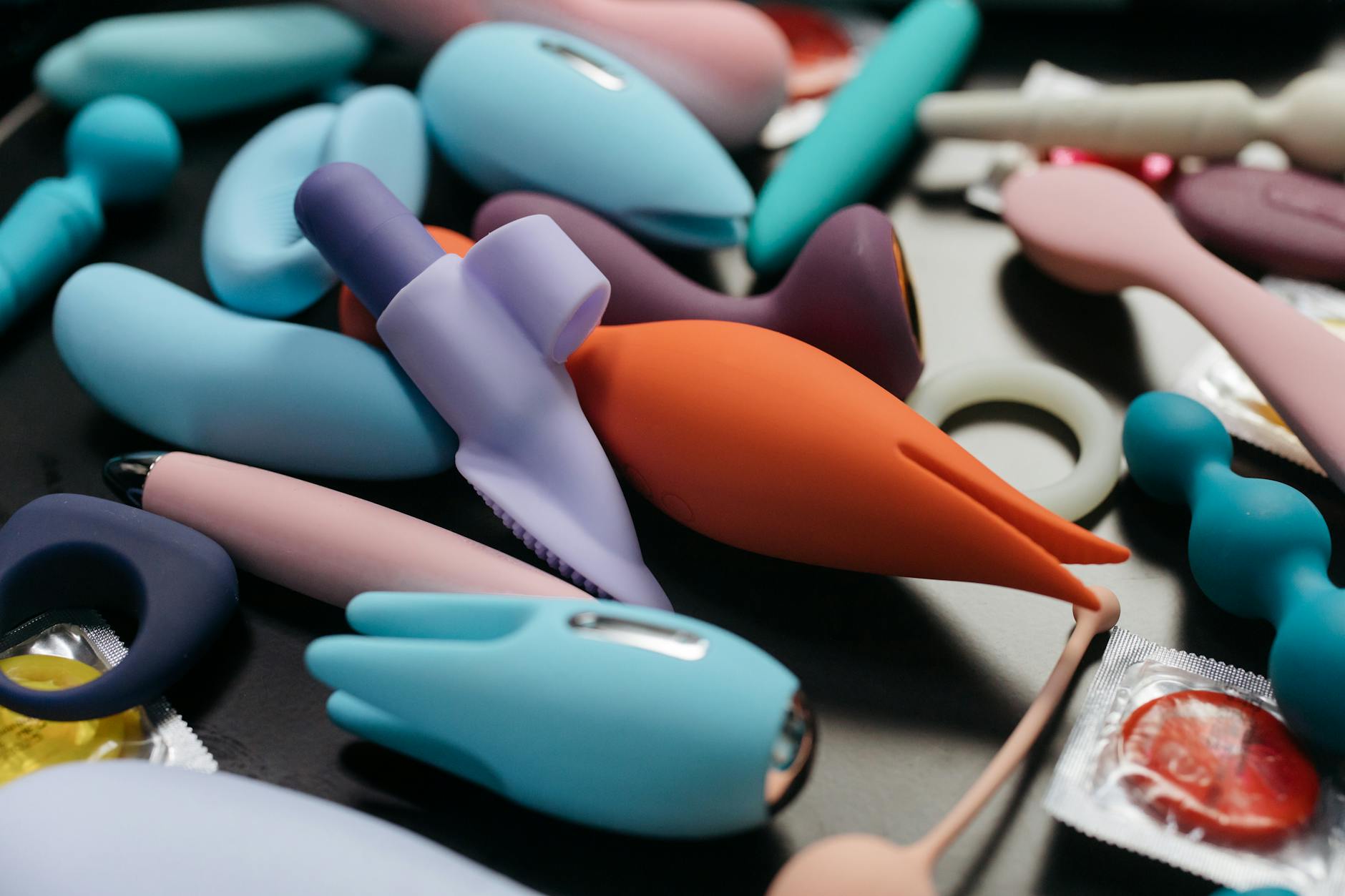
Here's the thing nobody tells you
Introducing a vibrator to partnered sex isn't actually about the vibrator. It's about permission. Both of you are probably carrying some version of the same fear: "What if they think I'm not enough?" or "What if this changes things?" Those conversations live underground until you drag them into the light.
Once you do, everything gets simpler.
Why partners get nervous about vibrators (and it's not what you think)
I've worked with hundreds of couples on this, and the resistance almost never comes from genuine jealousy. It comes from something deeper: the feeling that pleasure is a referendum on the relationship. As if your orgasm is a scorecard. As if needing a lemon vibrator means something is wrong.
It doesn't.
What a lemon clitoral vibrator actually means is that you're both curious. You're both willing to try something that might feel better. That's not a failure on either side. That's growth.
The second thing that stops people is logistics anxiety. How do you actually position yourselves? Do they just watch? Do they hold it? Is there a "right way" to do this that feels natural instead of clinical?
There's no right way. There's only what works for you two.
The conversation before the toy arrives
Don't wait until the moment of intimacy to mention it. Have this talk when you're clothed, calm, and not about to be naked together. Timing matters wildly.
Try something like: "I've been thinking about trying something new. There's this lemon vibrator called the Lem that I've read really good things about. I'm curious if you'd be open to exploring that together." Then stop talking. Let them respond without pressure.
If they ask why, be honest: "I think it would feel good, and I want to experience it with you instead of alone." That last part matters because it reframes the vibrator as a plus to the connection, not a replacement for it.
If they're hesitant, ask what they're worried about. Usually it's one of three things:
"I'm worried you won't want me anymore." Tell them that's not how pleasure works. An orgasm from a vibrator doesn't erase desire for them. It often deepens it because you're relaxed, you're less in your head, and you're more present together.
"I don't know what to do with it." That's fair. Tell them you can figure it out together. No one is supposed to magically know how to hold a lemon vibrator on a partner's body. It takes three minutes of talking to find what feels good.
"Isn't that weird?" Not weirder than anything else you probably do together. The only way it's weird is if you make it weird by treating it like something shameful. Treat it like you'd treat lubricant or any other tool that improves the experience.
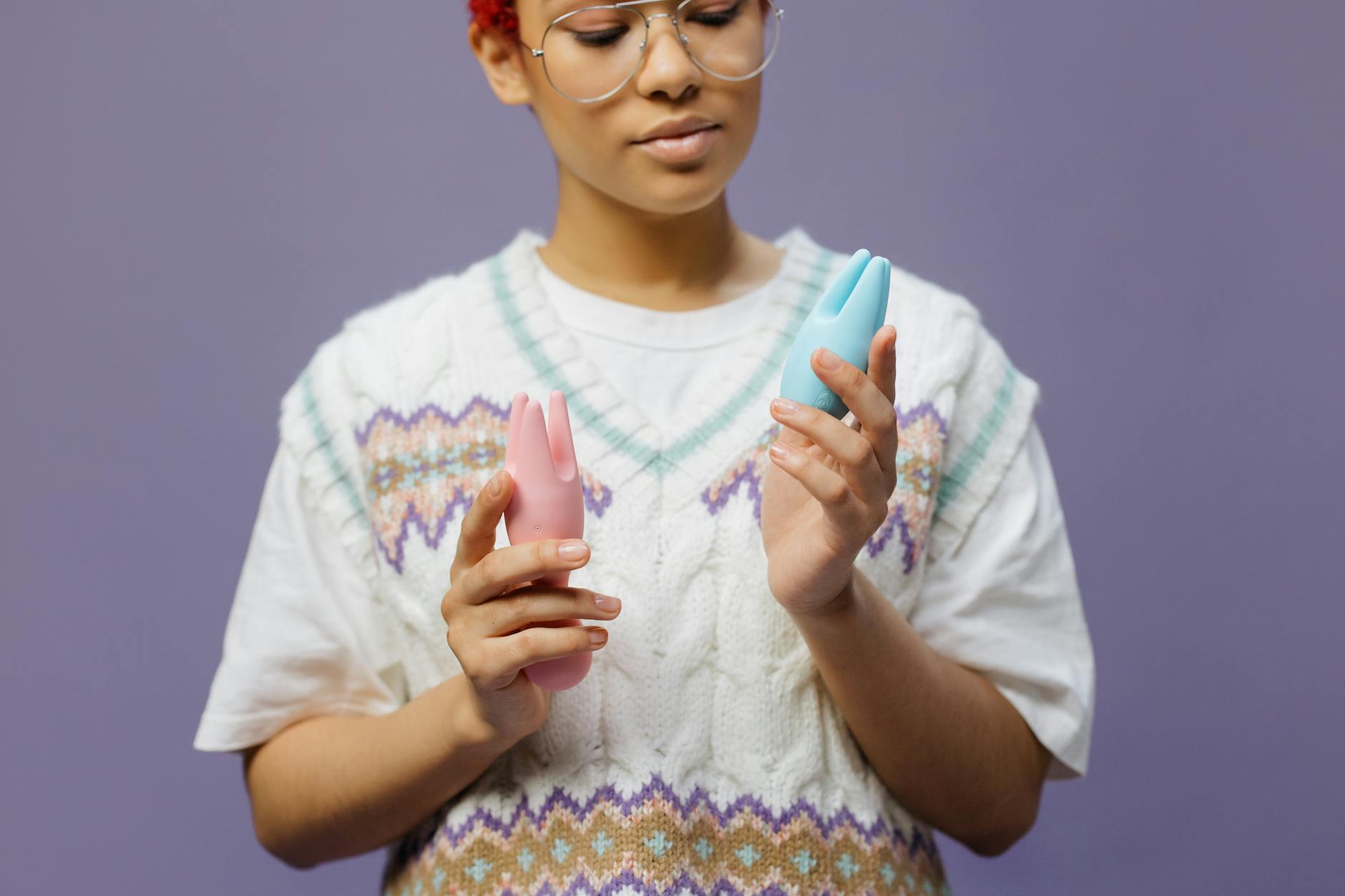
Photo by cottonbro studio on Pexels
How to actually use it together (without it feeling weird)
When you're ready, start simple. Have your partner hold the lemon vibrator while you guide where you want it. This keeps them involved and takes the pressure off you to manage the mechanics while you're trying to enjoy the sensation.
Start on the lowest setting. A lemon clitoral vibrator like the Lem has multiple patterns, but you don't need intensity right away. Explore what feels good at lower speeds first. The whole point is to be present with each other, not to race toward an orgasm.
Here are three positions that work well:
Position 1: You're lying back, they're beside you. Your partner holds the vibrator and you guide their hand with yours. You can make eye contact, kiss, talk. It feels connected because you're literally holding hands.
Position 2: You're on top, they're underneath. You can control the angle and depth of whatever else is happening while they handle the vibrator against your clitoris. This gives you autonomy while keeping them involved.
Position 3: Mutual exploration. You lie together facing each other, and they experiment with the lemon vibrator while you tell them what feels good. No pressure to perform. Just information gathering.
None of these is "correct." What matters is that you both feel like you're part of the experience, not performing for an audience.
The communication part (it's not awkward, I promise)
Talk during. "That feels good," "a little slower," "try the other pattern," "move it slightly left." Dirty talk if you want. Or just practical feedback. Both are fine.
What kills connection is silence and performance. Silence makes it feel clinical. Performance means you're thinking about how you look instead of how you feel.
So actually narrate your pleasure. "I like that," "oh that's good," "yeah right there." It gives your partner real-time information and it keeps you both grounded in what's actually happening instead of what you think is supposed to happen.
If the lemon vibrator feels too intense on your sensitive tissue, say so immediately. You can add lubricant, use a lighter touch, or try a different pattern. Pleasure should never require you to tough it out.
What to expect emotionally
Some people feel vulnerable the first time. You're literally showing someone the exact spot and the exact sensation that makes your body respond. That's exposed. That's real. That's worth acknowledging to each other afterward.
Other people feel freed. They stop performing and start experiencing. They realize their partner is genuinely interested in their pleasure, not checking a box.
A few people feel nothing the first time. Nervousness is a real anesthetic. That's fine. You can try again when the novelty wears off and you're less in your head.
Afterward, check in with each other. "That felt good," "I liked that you were so present," "I want to try it again." Or: "I was nervous, can we talk about it?" You're building a shared language around pleasure, and that takes a few conversations.
Why a lemon vibrator specifically
Clitoral vibrators like those from Hallo Nancy Lemons are built for external pleasure, which means there's less complexity and more room for focus. A lemon clitoral vibrator uses air-suction or vibration patterns to stimulate without requiring penetration, which means you can keep doing whatever you're already doing together and just add to it.
The Lem, in particular, works well for partnered exploration because it's compact enough that your partner can hold it easily, but powerful enough that you'll actually feel something. No fumbling. No "is this even on?" It just works.
The conversation after
This is the part most people skip and then wonder why the second time feels awkward.
Within a day or two, revisit it. "I'm really glad we did that," or "That felt more connected than I expected," or "I want to try it again but maybe a different way." Make it normal. Make it part of your relationship instead of a one-off experiment.
If it didn't work, that's also fine. Not every tool works for every person or every couple. You can try a different lemon adult toy, try again when you're less nervous, or move on. What matters is that you tried something together, and you talked about it honestly.
FAQ
Should I be worried my partner will get addicted to using it with me?
No. Vibrators aren't habit-forming in the way drugs are. Some people prefer vibration once they've experienced it, sure. That's preference, not addiction. And knowing what actually gets you off is valuable information for both of you. It means the next time you're together without a vibrator, you know how to touch you in ways that work.
What if they want to use it on themselves too?
That's great. That's actually ideal because it takes the pressure off you to perform or feel responsible for their pleasure. You can explore solo and together. The vibrator isn't a couple's possession. It's a tool that belongs to whoever is using it.
Is it weird if I orgasm differently with the lemon vibrator than without it?
Not at all. Orgasms aren't one-size-fits-all. Some people have stronger ones with vibration. Some people have different kinds of pleasure (more localized, more intense, longer lasting). That's not weird, that's just your body responding to different input. Your partner isn't "less good" at sex because a lemon clitoral vibrator produces a different result.
What if one of us wants to use it and the other doesn't?
Use it solo. You don't need both people interested in the same tool for both people to benefit from it. Maybe your partner never wants to touch a lemon vibrator but loves watching you use it. Maybe they prefer their own method of pleasure. That's fine. You're not joined at the hip during sex.
How do I know if my partner is actually comfortable or just pretending?
You ask. "How are you feeling about this?" "Do you want to keep going?" "Is there anything you want to change?" And you listen for the actual answer, not the one you hope for. If they seem distant or uncomfortable, pause and check in. A good sexual experience requires both people to be genuinely into it.
Can we use a lemon vibrator if we're in a newer relationship?
Yes. There's no timeline for this. Some couples bring toys into the relationship early because they want to know sexual compatibility quickly. Others wait. The only requirement is that both people genuinely want to try it. Pressure kills arousal faster than anything else.
The real shift that happens
Once you've done this once, something changes. You've moved from "sex is what we do" to "sex is something we explore together." You've proven that you can talk about desire without shame. You've shown each other that you're both willing to try things that might feel better.
That's actually the whole relationship right there. The willingness to grow together. The vibrator is just the tool. The growth is the point.
If you're ready to have that conversation, start with honesty. "I'm curious about exploring together." That's enough.