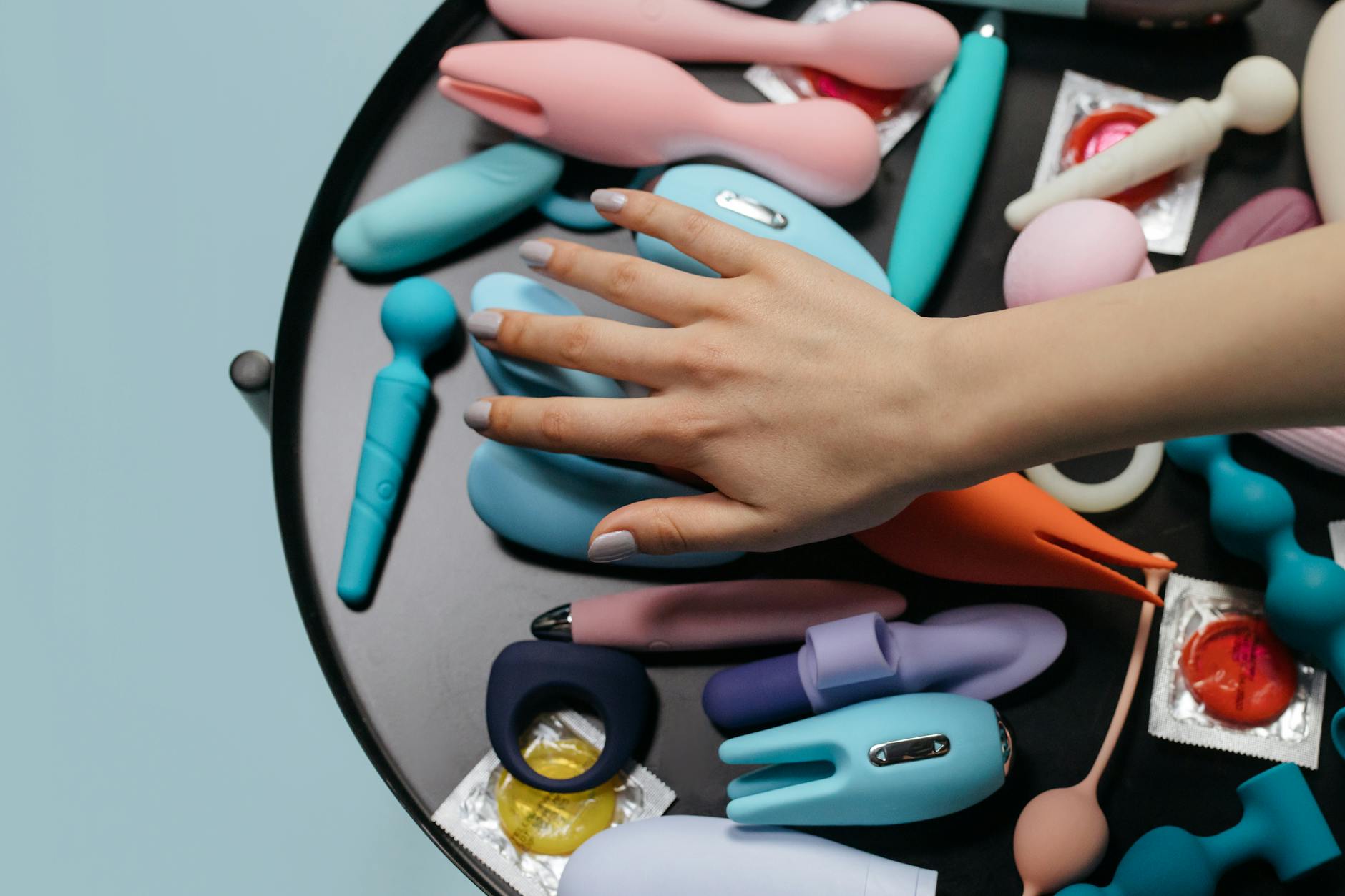
Here's what performance anxiety actually does to your body
Let's be real. Performance anxiety doesn't just mess with your head. It hijacks your nervous system. Your brain floods with cortisol, your pelvic floor clenches, blood redirects away from your genitals, and arousal becomes functionally impossible. You're not broken. You're just in fight-or-flight mode.
The worst part? Knowing you should be aroused makes it worse. The pressure to "perform" or "respond" or "finish" creates a feedback loop that's nearly impossible to escape on your own.
Why clitoral vibrators work differently when anxiety is the problem
A good clitoral vibrator like the Lem doesn't ask anything of you. It doesn't require you to achieve something or prove something. It's not watching you. It's not waiting for a particular response. That removal of expectation is, weirdly, everything.
When you use a clitoral vibrator with the explicit goal of relaxation rather than orgasm, something shifts. Your nervous system gets the message: this is not a test. This is sensation for its own sake. That permission alone can reset the arousal circuit.
The suction pattern of a device like a lemon vibrator is also physiologically different from manual stimulation or penetration. It's rhythmic, consistent, and doesn't depend on your partner's stamina or your ability to stay "present." You can zone into the sensation without managing anyone else's experience.
The anxiety-specific setup that actually works
Three things matter more than technique when performance anxiety is the culprit.
First: remove the audience. If you're using a clitoral vibrator with a partner, the anxiety often isn't about the device. It's about being watched. If that's your block, ask your partner to leave the room. This isn't rejection of them. It's signal work. You're saying "I need to know my body trusts itself first." A good partner gets that.
Second: set a timer for 15 minutes and agree that nothing has to happen. No orgasm goal. No arousal goal. Just sensation. This sounds trivial, but removing the finish line changes everything neurologically. Your amygdala stops scanning for success and failure. You can actually feel.
Third: start at the lowest intensity. This matters with a lemon sucker more than other toys because the sensation is intense. If you go straight to medium, your anxious brain interprets intensity as pressure. Start at pattern one. Stay there. Your nervous system needs to know that slow is safe.
How to rewire the anxiety response with consistent use
Performance anxiety lives in repetition. Every time you feel it spike and assume you're broken, that pathway gets deeper. But the inverse is also true. Every time you use a clitoral vibrator without outcome pressure and actually feel something, you're retraining your nervous system.
I tell clients: use your lemon vibrator three times a week for two weeks with zero performance expectations. Not to orgasm. Not even necessarily to get aroused. Just to remind your body that sensation without judgment is possible. After two weeks, most people notice a shift. The anxiety doesn't vanish, but it loosens.
When anxiety eases, arousal usually follows. Not because you're trying harder. Because you've given your nervous system permission to want something without proving it.
What happens when anxiety and a partner both need attention
If the performance anxiety is happening with a partner, the conversation has to happen outside the bedroom first. This is not sexy. It's necessary.
Tell them: "My body shuts down when I feel watched or evaluated. This isn't about you. It's about my nervous system. I need time alone with a vibrator to remember what sensation feels like without pressure. Then we can explore together."
Most partners who care will understand. Some will want to help immediately, which often makes it worse. Setting a timeline helps. "I'm going to do this solo for two weeks. Then we'll try something together, low pressure, no finish line."
When you do bring a partner back in, the lemon vibrator shifts the dynamic. You're not proving anything to them. You're sharing sensation. That's a completely different energy than performing.
The role of lubrication when anxiety is involved
Anxiety constricts tissue. Your vaginal canal may be drier when you're stressed, even if you're interested in sex. Water-based lube isn't optional when performance anxiety is in play. It's part of the nervous system reset.
Apply lube generously. Let it sit for a moment. Then start with the lowest vibration pattern and stay there for five minutes minimum. Your tissues need time to recognize this isn't a threat. Lube helps that message land.
When to involve a therapist alongside the vibrator
If performance anxiety is stemming from past sexual trauma, body image issues, or relationship trust problems, a vibrator is a useful tool but not a complete solution. A sex-positive therapist trained in somatic work can help rewire the nervous system response faster than solo practice alone.
Specifically, look for therapists trained in Sensate Focus exercises, which are designed to remove performance pressure and rebuild sensation awareness. A clitoral vibrator like the Lem works beautifully alongside that work. You're training your nervous system in two directions at once: removing the anxiety response and teaching yourself that pleasure is possible.
The timeline is not linear
Some people feel relief in days. Others take weeks. Anxiety isn't logical, so the healing isn't linear either. You might have a breakthrough session where everything feels great, then feel blocked again the next time. That's normal. You're literally retraining your nervous system's threat detection.
The key is consistency without pressure. Use your vibrator regularly but don't make that a performance standard too. If you miss a few days, restart without guilt. If one session feels blocked, the next one might crack open. This is long-term nervous system work, not a quick fix.
The good news: almost every person with performance anxiety who gives themselves permission to use a clitoral vibrator without outcome expectations finds that arousal returns. Not instantly. But it does.
FAQ: Performance anxiety and pleasure
Can performance anxiety ever fully go away when using a vibrator?
Performance anxiety often eases significantly but rarely vanishes completely, especially early on. What changes is your relationship to it. Instead of it blocking arousal, you'll notice it spike and then settle. You'll learn that you can feel pleasure even while some anxiety is present. That's the real win.
Is it normal to feel more anxious the first time using a clitoral vibrator?
Absolutely. New sensation plus an outcome expectation (especially if you're expecting the vibrator to "fix" the problem) can spike anxiety initially. That's why the first few sessions need zero pressure. Tell yourself: this is data collection, not performance evaluation.
Should I use a lemon vibrator with or without a partner when anxiety is the issue?
Start alone. Once you've had several sessions where your body felt safe and pleasure happened, then you can bring a partner in if you want. Solo practice rebuilds your body's trust in itself. That foundation makes partnered pleasure better, not worse.
Does medication affect how performance anxiety shows up during vibrator use?
Some medications (SSRIs, antipsychotics, blood pressure meds) can reduce sensation or make orgasm harder. That's not the vibrator's fault or yours. If you suspect medication is involved, talk to your prescriber. You might need a dose adjustment or timing change, not a new toy.
What if I start to feel panic while using the vibrator?
Stop immediately. Sit with the feeling for a moment without judgment. Then ask: is this panic, or is this your nervous system releasing tension? Sometimes pleasure-adjacent sensations feel like panic because your body isn't used to sensation without threat. If it's genuine panic, step back and consider working with a somatic therapist.
Can a lemon sucker help if my anxiety is about being "too slow" to orgasm?
Yes. Clitoral suction vibrators like the Lem are often faster than other methods, which can feel less pressured. The consistency of the pattern means your body doesn't have to do anything. It just has to receive. That removal of effort often speeds arousal once the anxiety settles.
You don't have to earn your pleasure
Performance anxiety is built on a lie: that you have to prove something to deserve sensation. A clitoral vibrator, used without outcome expectations, is one way to tell your nervous system that's not true. Pleasure isn't a test. Sensation isn't something you perform. It's something you receive.
Start small. Start alone. Start without goals. The rest follows.
If you're ready to explore this further, our team at Hallo Nancy Lemons is here to help. We can answer questions about which clitoral vibrator might feel right for you, and our contact page has resources for finding therapists trained in sexual health and anxiety.
Sources
Brotto, L. A., & Basson, R. (2014). "Group therapy for women with sexual dysfunction." Journal of Sexual Medicine, 11(9), 2830-2841.
Meston, C. M., & Frohlich, P. F. (2000). "The neurobiology of sexual function." Archives of General Psychiatry, 57(11), 1012-1030.
Perelman, M. A. (2003). "Integrating sildenafil and cognitive-behavioral therapy: The cognitive-physiological model of sexual response." Journal of Sex & Marital Therapy, 29(1), 15-30.