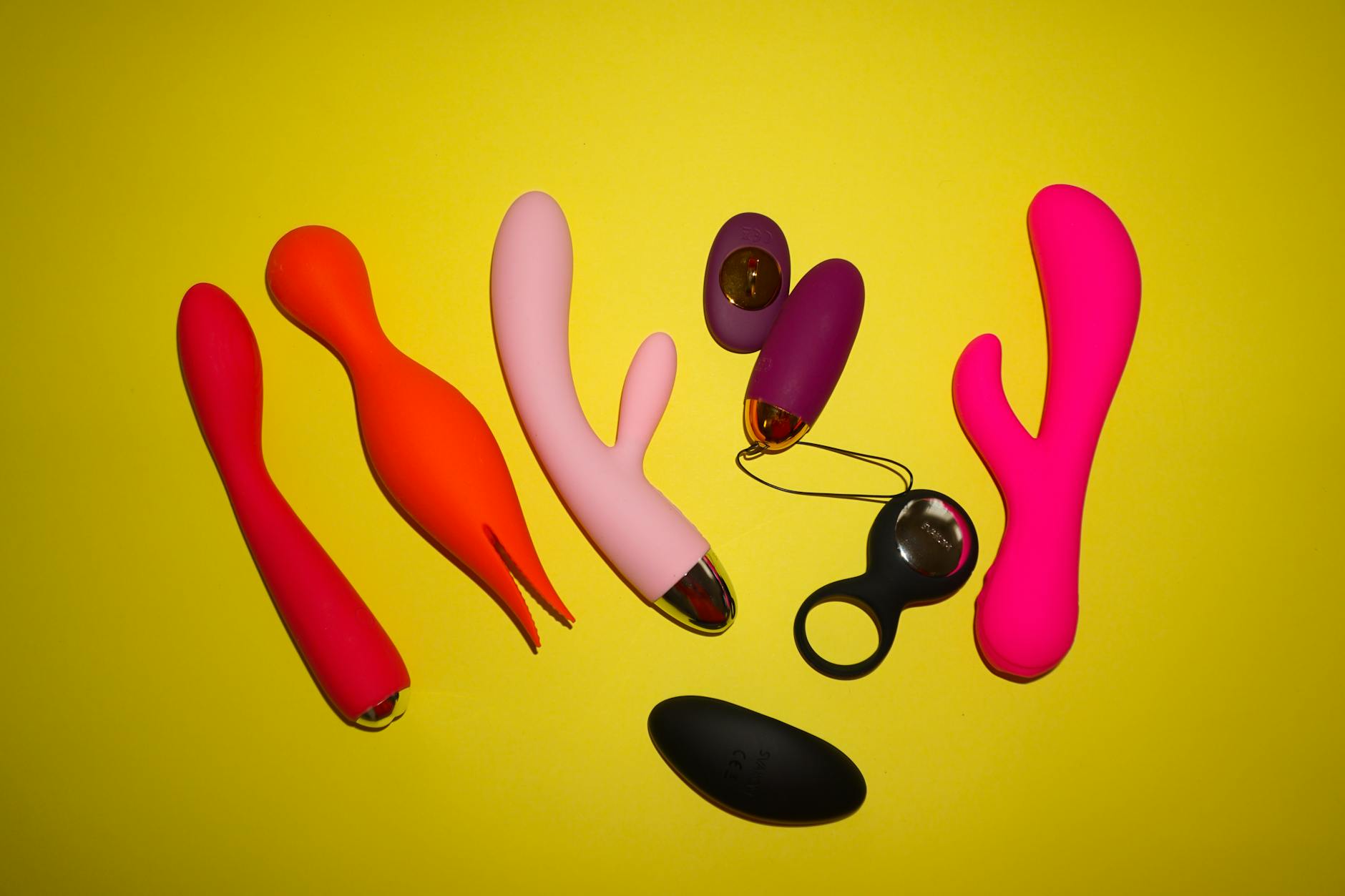
Here's what I actually hear when someone says their partner doesn't like toys
It's rarely about the toy itself. Over fifteen years as a couples therapist, I've learned that toy resistance is usually a symptom of something underneath. Fear of inadequacy. Anxiety about being replaced. Worry that wanting a vibrator means something is wrong with the relationship. Sometimes it's all three at once.
Let me be direct: your partner's resistance is worth taking seriously. Not because the resistance is correct, but because it's real for them. And before you introduce a lemon clitoral vibrator into shared pleasure, you need to understand what story they're telling themselves about it.
Why partners actually resist toys
Three core fears show up repeatedly in my office.
First: inadequacy. "If she needs a vibrator, that means I'm not enough." This is the big one. A lemon vibrator feels like evidence that your body, your touch, your rhythm somehow failed. The logic is faulty (a vibrator does something different, not better), but the fear is completely human.
Second: replacement. "What if they prefer the toy to me?" This one ties sex to worth. If you're having intense pleasure with a device instead of with them, the anxiety goes: I'm losing you, bit by bit, to an object. It's deeper than jealousy. It's existential.
Third: loss of control. Sex is one of the few places where partners feel they know the script. A new element changes the dynamic, and change feels like losing ground. Especially if your partner struggled with anxiety or grew up in households where deviation meant trouble.
None of these fears are rational. All of them are worth understanding before you bring out any toy.
The conversation before the toy
This is not a "convince them" conversation. It's a clarification conversation.
Start like this: "I want to talk about something, and I'm not asking you to agree with me yet. I'm asking you to tell me what you feel when you think about me using a vibrator during sex."
Then listen without defending. Let them say the scary thing. "You'd rather have that than me." "It means you're not happy with our sex life." "It feels like you're cheating somehow." Don't interrupt. Don't explain why they're wrong. Just listen.
When they're done, say: "That makes sense. I'm hearing that you feel like a toy would mean I don't want you. Is that right?"
This is clarification, not agreement. You're naming the fear so it becomes discussable instead of just floating around, poisoning everything.
Then you get to say your piece: "Here's what's actually true for me. I want more intensity during orgasm. That's not about you being not enough. It's about my body needing a specific kind of stimulation. And I want that to be something we explore together, not something I do secretly or without you."
That last part matters. You're not asking for permission to leave them out. You're inviting them in.
Three ways to reframe the toy as connection, not competition
Make it about the experience, not the mechanics. "I want us to explore what feels good together" hits differently than "I want a toy." The first is about intimacy. The second sounds like a shopping list.
Use it together from the start. Don't introduce a lemon clitoral vibrator as something you use alone. Introduce it as something you'd use while they're touching you, kissing you, watching you. The vibrator does one job (intense clitoral stimulation). They do everything else. This is collaboration, not replacement.
Be explicit about what you still need from them. "I want you inside me while I use this." "I want your hands on me." "I want you to see what makes me come." These statements tie the toy to them, not away from them. The lemon vibrator becomes part of the connection, not an alternative to it.
Manypartners who were initially resistant shift when they realize the toy makes sex more interesting for them too. If you're having more intense pleasure, you're more present, more vocal, more engaged. That's better for both of you.
When they say yes but don't mean it
This happens. Your partner agrees, but there's reluctance underneath. They go quiet. They stop initiating. They seem tense during sex.
This is not "push forward anyway." This is "pause and reconnect."
You might say: "I notice things feel different since we talked about this. I don't want to do something that makes you feel bad. What's happening underneath?"
Often what's underneath is shame. They feel like they should be okay with it because they love you, but they're not. And now they feel broken for not being okay with it. That's a different problem, and it needs a different solution. It might need a couples therapist, honestly. There's no amount of reassurance from you that will fix their internal narrative.
If your partner is genuinely not comfortable, forcing it damages the relationship more than skipping the toy does.
What to do if you decide to proceed
Start small. A lemon vibrator designed for couples play (like a clitoral suction toy that works differently than a traditional vibrator) can feel less threatening than a wand or a bullet. It's different enough that it doesn't feel like "what your fingers do, but better."
Set a specific plan: "This Saturday, after dinner, I want us to try this together. You stay in control. You decide when and how. I'm just here to feel what happens."
Take the pressure off performance. This is exploration, not a test of your sex life. It can feel awkward. That's normal. Laugh about it. Make it light.
Check in after. "What was that like for you?" Listen without defending your experience. If they hated it, okay. You tried. You don't have to do it again. If there was even one moment of curiosity, that's something to build from.
When the real issue is deeper
Sometimes toy resistance is a stand-in for something else. Maybe your partner is struggling with depression and sex feels like pressure. Maybe there's resentment in the relationship that hasn't been addressed. Maybe they're dealing with their own sexual shame or trauma that makes vulnerability around devices feel impossible.
In those cases, a lemon clitoral vibrator isn't the problem. The relationship dynamic is. And no toy will fix that.
This is when you might benefit from couples therapy or individual therapy for your partner. I'm not saying that lightly. I'm saying that from experience. Some resistance is reasonable. Some resistance is a symptom of something that needs real help to untangle.
The possibility you haven't considered
What if, after all this conversation and patience, your partner still says no? Really says no.
Then you have a choice: you can accept that boundary, or you can acknowledge that this is a fundamental incompatibility. Both are valid. One isn't better than the other. But it's important to be honest about which one you're choosing.
If you choose to accept the boundary, do it fully. Don't resent them. Don't circle back to it every few months. Don't use toys secretly and feel guilty about it. That poisons the relationship more than the toy itself ever could.
If you realize you can't accept the boundary, that's information too. Some people need a partner who is willing to explore. And that's okay. It doesn't make you selfish. It makes you honest.
Most couples don't land on either extreme. Most people come to a middle ground where toys exist, are used, and become unremarkable over time. The initial anxiety fades. The vibrator sits in the nightstand, gets used sometimes, doesn't get used other times. It becomes part of the landscape instead of a crisis.
That middle ground takes conversation, patience, and willingness from both of you to examine what the toy actually represents. But when you get there, you often find that the relationship is stronger. Because you've practiced having hard conversations about desire. And that's never a bad thing.
People also ask
How do I know if my partner's resistance is a dealbreaker?
A dealbreaker is a value you can't compromise on. If sexual exploration is a core part of how you experience intimacy and your partner will never move on that, that's worth examining honestly. But test it first. Sometimes resistance softens with time, conversation, and patience. Give it real effort before you decide it's unsolvable.
Should I use a lemon vibrator secretly if my partner won't allow it?
I'd advise against it. Secrecy damages trust more than the toy itself ever would. If you feel you need to hide something from your partner, that's information about the relationship that's worth addressing directly. Either work through the resistance together, or accept the boundary, or acknowledge that this might be an incompatibility. Hiding it solves nothing.
What if my partner wants to use a toy but I don't?
Then you're on the other side of the same conversation. Listen to what the toy represents for them. Is it about wanting more pleasure? Is it about wanting to feel more sexy? Is it about exploring? Once you understand the real request, you can figure out if there's a version of exploring that works for both of you. And if there isn't, that's a boundary worth discussing.
How long should I give my partner to come around?
There's no time limit, but there's a difference between "needs time" and "will never be okay with it." If you've had the conversation, explained your perspective, listened to their fears, and given it a few months, you have enough information. You'll know if movement is happening or if you're just waiting for someone to change their mind.
Can a lemon clitoral vibrator actually help a couple reconnect?
Yes, but only if both people are genuinely curious. The toy doesn't fix a broken relationship. But if you're both willing, it can create new experiences together. It can interrupt old patterns. It can remind you that sex can be playful, not just routine. That's useful. That matters. But it only works if the foundation of trust and communication is there.
What if my partner says they're okay with toys but always wants me to hide it afterward?
That's a boundary that needs revisiting. If they're ashamed of the toy after using it, that shame is going to build. They're not actually okay with it. They're performing okay-ness. That's exhausting for both of you. Bring it back to the conversation: "I feel like you want me to pretend this doesn't exist, and that makes me feel ashamed. Can we talk about what's really happening here?"
Moving forward
Toy resistance in relationships usually isn't about the toy. It's about fear, shame, loss, control, and what sex means to each of you. The toy just brings all of that to the surface. That's actually useful, as uncomfortable as it feels in the moment. Because once you've named what's underneath, you can work with it.
If you're trying to navigate this with a partner right now, start with the conversation, not the toy. Listen more than you talk. Be willing to understand their fear without immediately trying to fix it. And then decide together what comes next. You might be surprised where you land. Most couples do.
If you need support thinking through relationship dynamics around pleasure and exploration, consider reaching out. Sometimes having a neutral third party help untangle these conversations makes all the difference.