
Here's what nobody tells you about life transitions and sex
You get married. You buy a house. Your partner lands a promotion that means 60-hour weeks. Or your kid comes home from the hospital. Or your mom moves in and needs care. And suddenly, the physical intimacy that held your relationship together just stops existing. Not because you've fallen out of love. Because you're both exhausted, distracted, or touched out.
This is normal. It's also lonely.
Why transitions tank couple intimacy first
When your nervous system is in overdrive—managing new routines, new stress, new identities—your brain deprioritizes pleasure. Cortisol rises. Desire flattens. Even if you still want your partner, the bandwidth to show up for partnered sex disappears.
Many couples I work with wait for the chaos to settle before addressing this. They assume intimacy will naturally restart once the transition ends. Sometimes it does. More often, you both get so used to the absence that restarting feels awkward.
Solo pleasure during these gaps isn't a workaround. It's maintenance.
Why a lemon clitoral vibrator works during high-stress transitions
A lemon vibrator—the suction-based design that defines Hallo Nancy Lemons' approach—requires almost no mental bandwidth. You don't need to choreograph anything or check in with a partner. You don't need to perform. You just need five minutes and a locked door.
That simplicity matters when your brain is already juggling a mortgage, a new commute, or grief. The lemon sucker's gentle suction feels responsive to your body without demanding anything back. You can slot it into the margins of your day. Before your partner wakes up. After the kids are down. On a lunch break.
It also works neurologically. Regular clitoral stimulation—even solo—keeps the dopamine and oxytocin pathways active. These are the same neurotransmitters that fire during partnered sex. You're maintaining the hardware while the relationship's software temporarily updates.
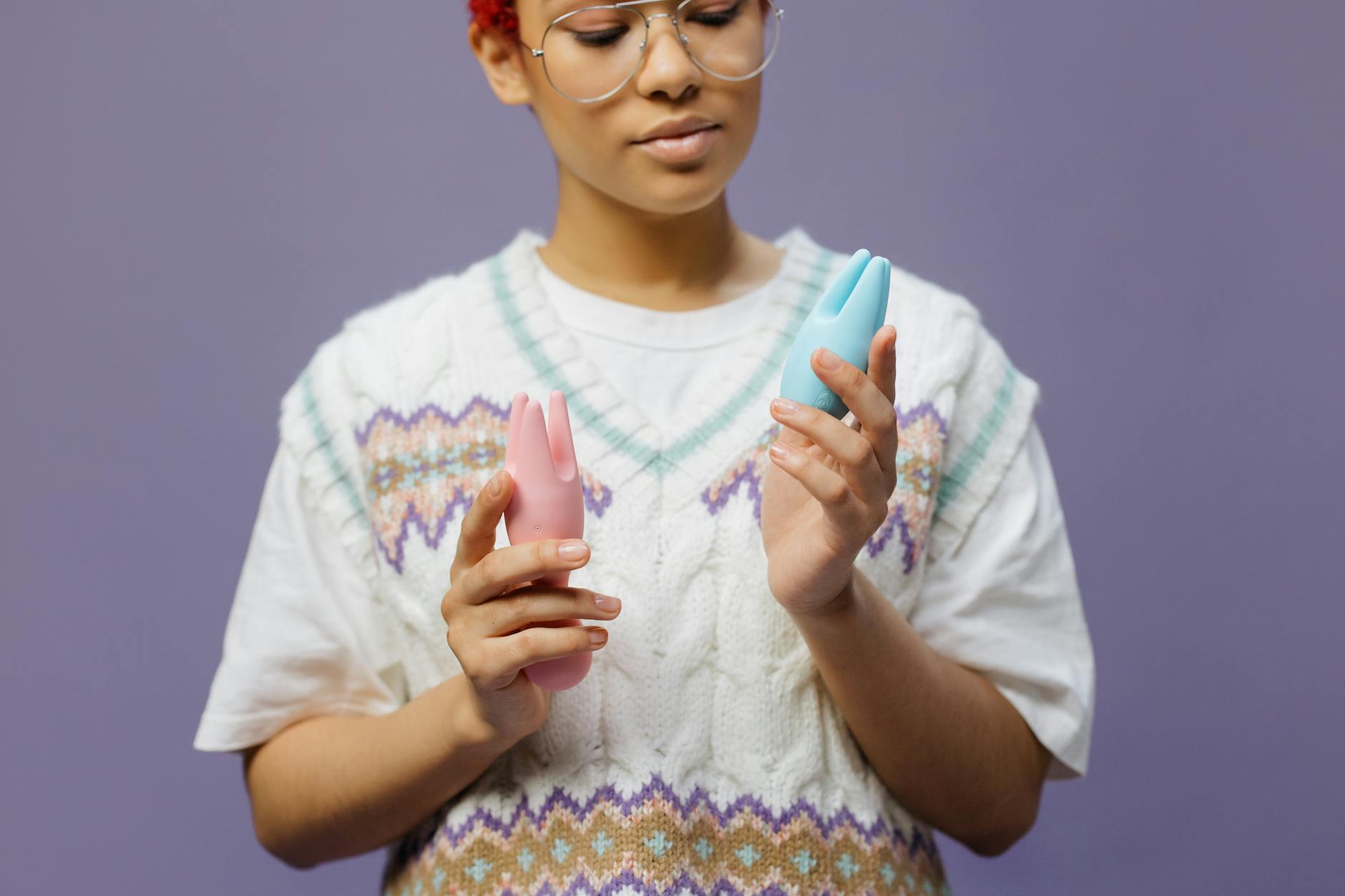
Photo by cottonbro studio on Pexels
What happens if you don't maintain solo pleasure during a transition
Three months into your new job, your partner initiates. You want to want it. Your body doesn't respond the way it used to. Now you're both confused. Did the transition break something deeper? Did you lose desire for each other?
Often, no. You just didn't keep the pathway warm.
When you use a lemon vibrator regularly during stressful transitions, you're essentially reminding your body that pleasure still exists. You're keeping your clitoral tissue responsive, your arousal circuitry active, and your sense of agency intact. When your partner is finally available again, you're not starting from zero.
I've seen couples who consciously used solo pleasure during transitions reconnect faster and more intensely than those who went silent. Why? Because solo pleasure during a gap isn't a replacement for partnership. It's proof that desire didn't evaporate. It was just dormant.
How to use a lemon sucker during a transition without it feeling weird
First: tell your partner, if you haven't already. Not as a confession. As a fact. "I'm going to keep using the Lem a few times a week while we're in the thick of this." Most partners—especially those already anxious about intimacy disappearing—feel relief. It signals that the absence is temporary and intentional.
Second: don't use it as a performance for your partner. That's a different thing. This is for you. Give yourself permission to prioritize it the way you'd prioritize sleep or eating. Non-negotiable maintenance.
Third: track what works. During high-stress periods, you might need longer warm-up time. You might prefer the Lem at lower intensities because your nervous system is already overstimulated. You might find that mornings work better than nights because your brain is fresher. Data matters. Use it.
Fourth: keep your lemon clitoral vibrator accessible. Not hidden. Not ashamed. A drawer by your bed sends a message to yourself: this is normal, this is yours, this is part of your health.
When to restart partnered intimacy during a transition
Don't wait for the chaos to fully settle. That's a myth. Transitions don't have a finish line. They have a "new normal."
Instead, look for a moment of cognitive space. Maybe the first week your partner's project launches and stabilizes. Maybe the weekend after you've both slept for 10 hours. Maybe the moment your kid's surgery recovery feels predictable.
Pick a low-pressure moment and name it. "I miss you." "I want to try." "No expectations." Honestly, how to use a lemon vibrator when partners' desire returns at different speeds is worth reading if you're navigating mismatched timelines.
Don't restart with the kind of sex you had before the transition. That was you before the transition. Restart with something gentler. Use the Lem together. Let your partner watch. Let it be a bridge, not a competition.
The difference between pausing and ending
This is the most important distinction. Many couples interpret an intimacy gap as a sign the relationship is weakening. It usually isn't. It's a sign your bandwidth is limited. Those are different diagnoses with different treatments.
If you maintain solo pleasure during the gap, if you stay connected to your own body and desire, if you communicate what's happening, most couples emerge from transitions with stronger foundations than they had before. Because you've both proven you can handle stress without abandoning each other.
Keeping a lemon vibrator in your routine during transitions is a quiet act of faith. Faith that your body still knows pleasure. Faith that your partner still matters. Faith that the gap is temporary.
Solo pleasure during a transition isn't selfish. It's insurance for the relationship.
Making solo pleasure non-negotiable during your transition
Treat it like therapy, because it kind of is. Set a rhythm. Twice a week. Once a week. Whatever you can hold. Use your Lem with intention, not guilt. Your nervous system is already taxed. This is one less thing to be overwhelmed about.
You could also explore how to use a lemon vibrator when rebuilding intimacy after infidelity if trust has been strained during your transition, since those same principles of rebuilding apply.
When the intensity of the transition finally drops—and it will—you won't be starting from a place of disconnection. You'll be starting from a place of remembered pleasure.
FAQ: Intimacy gaps during relationship transitions
Can using a lemon vibrator solo help me want my partner again?
Yes, but indirectly. Solo pleasure keeps your arousal circuitry active so your body remembers how to respond. That makes it easier to reconnect with your partner when bandwidth returns. It's not about the toy. It's about the neural pathway.
My partner thinks using a lemon clitoral vibrator during a transition means I want to leave them.
This is worth a conversation. Many partners interpret solo pleasure as rejection when they're already feeling vulnerable. Reframe it: "I'm using this so I stay connected to my body and so that when we're less stressed, we can reconnect." Some couples even use it together as a way to stay intimate without the full energy cost of partnered sex.
How often should I use the Lem during a stressful transition?
Two to three times weekly maintains arousal responsiveness without adding pressure. Some people go daily. Some do weekly. The rhythm doesn't matter as much as consistency. If you're going weeks without touching your clitoral vibrator, that gap will show up in your body's responsiveness later.
Is it normal for my clitoral sensitivity to drop during a transition?
Completely. Stress dulls sensation. Cortisol and adrenaline suppress some sensory acuity. If the Lem feels less intense than usual, try starting at lower intensities and building up. Your body isn't broken. It's just operating on a different bandwidth. This is worth addressing with a healthcare provider if numbness persists beyond the transition.
What if my partner wants to use the lemon sucker with me during the transition?
That's a different conversation, and it can be intimate. But don't feel obligated. Solo pleasure during a transition is specifically about maintaining your own agency and arousal. If partnered use feels like added performance pressure, keep it solo. Your body's pleasure is non-negotiable right now.
Should I feel guilty for prioritizing solo pleasure over partnered sex during a rough season?
No. Your body is speaking a language. Listen to it. During high-stress transitions, solo pleasure often feels more accessible than partnered sex because it requires less negotiation, less vulnerability, and less energy. That's not infidelity. That's triage. Honor it.
The long view
Relationship transitions are inevitable. You will move. You will change jobs. You will get sick. You will grieve. You will have seasons where partnered intimacy fades. That's not a failure. That's a fact of long-term partnership.
What matters is what you do in the gap. If you let it become a void, reconnecting is harder. If you maintain solo pleasure with intention, you're telling your body and your partner a simple truth: this pause is temporary, and desire is still alive.
A lemon vibrator—one of the best clitoral vibrators for responsive, low-effort stimulation—is perfect for this work. It doesn't judge your stress levels. It doesn't ask you to perform. It just reminds you that you deserve pleasure, even during the hard seasons.
Reach out to contact if you want to talk through what solo pleasure looks like for your specific transition.