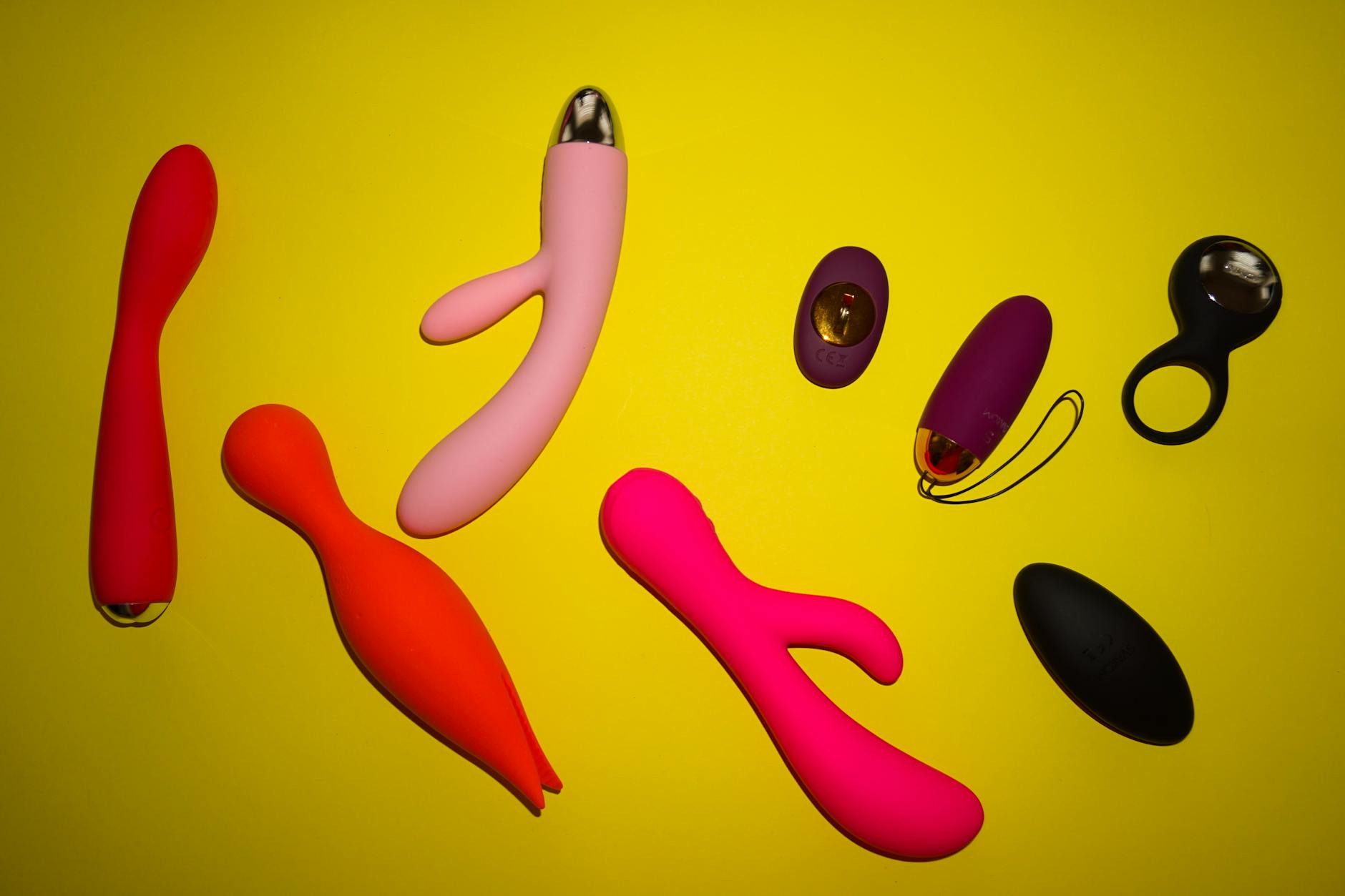
How to Use a Lemon Vibrator When Clitoral Sensitivity Peaks in Your 30s
Honestly? Your 30s are when your body finally figures out what it wants. That includes how it wants to be touched.
Clitoral sensitivity shifts between your 20s and your 30s in ways nobody really talks about. Some people find their sweet spot becomes more intense. Others discover new sensations entirely. And some realize that what worked at 25 actually feels kind of frustrating now. None of this is random. There's real biology happening, and understanding it changes how you approach pleasure.
I've worked with countless clients navigating this transition, and the pattern is consistent: the people who adapt their tools and techniques report deeper, more consistent orgasms. The ones who keep doing what they did before often feel like something's broken. Nothing's broken. Your body is actually working better.
What actually changes in your 30s
Your 30s bring a subtle shift in hormonal balance. Estrogen levels stabilize (especially if you've been on hormonal birth control for years), and your body's sensitivity to touch becomes more refined. Neurologically, your clitoris has around 8,000 nerve endings, and your brain's ability to process those signals intensifies with age and experience. You have better proprioceptive awareness. That's a fancy way of saying you know your body better.
Physically, the clitoral tissue itself can become more responsive. The glans (the visible part) actually contains more engorged blood vessels in your 30s than your 20s if you're having regular sexual activity. More blood flow means more sensation capacity. It also means your sensitivity threshold can shift, sometimes dramatically.
Here's what often gets missed: sensitivity and preference aren't the same thing. Someone can have heightened sensitivity but prefer gentler touch. Someone else can have lower baseline sensitivity but want intense pressure. Your 30s is when you usually figure out which one you actually are, rather than guessing based on what you've read or what a partner expected.
Why intensity feels different now
Think of it like audio equipment. In your 20s, you were mostly just cranking the volume. By your 30s, you've learned how to use the EQ. You want precision, not just power.
Direct vibration patterns that felt amazing at 22 might feel overwhelming or even painful now. That's not weakness. That's sophistication. Your nervous system has learned to distinguish between satisfying stimulation and just sensory noise. A lemon clitoral vibrator works particularly well during this phase because the suction mechanism lets you control intensity without relying on raw vibration strength. You get nuance.
There's also a psychological shift. Your 30s tend to bring clarity about what you actually want versus what you felt pressured to want. That mental space translates into physical sensation. When you're not performing or second-guessing yourself, your body can actually respond more intensely. Pleasure becomes less about endurance and more about depth.
How to assess your new sensitivity baseline
Start by checking in solo, with no pressure. Give yourself 15 minutes without distractions. Pay attention to what feels good without judgment.
Begin with the lowest setting on your lemon vibrator. The Lem has multiple intensity patterns, so start at pattern 1 or 2. You're not looking for immediate pleasure. You're gathering information. Notice where on your body the sensation feels best. Some people in their 30s suddenly discover they prefer stimulation on the shaft of the clitoris rather than the glans. Others find indirect stimulation (through the hood) becomes their favorite. This data matters for your partner, if you have one.
After 5 minutes, move to the next pattern. Keep going until you find the one that feels satisfying without feeling aggressive. That's your baseline. Most people settle somewhere in the middle of the intensity range, not at the maximum.
Using a lemon vibrator at your new sensitivity level
Here's the practical part. Lemon clitoral vibrators use air-pulse technology rather than traditional vibration, which means they feel different from standard vibrators. That difference is often exactly what people in their 30s are looking for.
The suction creates a gently rhythmic pressure that builds sensation slowly. You can hold it in place and let the pattern do the work, or you can experiment with light movement. Because the intensity is controlled by the pattern rather than the motor speed, you get more nuance. Pattern 1 might be perfect for foreplay. Pattern 3 might be what you need for an orgasm. Pattern 5 might feel too much even though you're plenty aroused.
Start with plenty of lubrication, even if you don't think you need it. Yes, your 30s brought better natural lubrication for most people. But the Lem works best with a water-based lube because it helps the seal and makes the sensation even smoother. About 30 seconds of warming up with your hands or a partner's touch, then introduce the vibrator.
Position matters now too. In your 20s, maybe you could come from almost any angle. Your 30s often bring stronger preferences. Lying on your back, sitting up, or side-lying might all feel wildly different. The angle changes how the suction engages your tissue, so experiment.
Communicating this shift to a partner
If you're partnered, this is an important conversation that has nothing to do with your partner's performance. Your body is changing. Your preferences are evolving. That's healthy information, not criticism.
You might say something like, "I've noticed my body responds differently now, and I'm learning what really works. I'd love to explore this together." That opens a door instead of closing one. Then actually show them. Have them watch you use the lemon vibrator solo so they see what gets you there. Let them try it on you. Make it collaborative instead of instructional.
The people who thrive in their 30s sexually are the ones who treat their changing body as interesting rather than frustrating. Your partner probably wants to know this stuff too.
Building intensity when sensitivity shifts
This is where it gets fun. If you've hit your new sensitivity baseline and you're ready for intensity, you have options that don't involve cranking the Lem to maximum.
Try combining patterns. Use pattern 1 for the first few minutes, then switch to pattern 3. Your clitoris has already started responding to pattern 1, so when you shift, the intensity feels different even though it's the same technical power. You can also bring in other sensations. Light touch from a partner on your breasts, inner thighs, or neck while using the vibrator creates a layered sensation that often leads to stronger orgasms than the vibrator alone.
Pacing matters more in your 30s. Many people report their best orgasms come from 10-15 minutes of consistent stimulation rather than quick, intense sessions. Your nervous system has time to build arousal in a more graduated way. The Lem's multiple patterns are perfect for this because you can stay engaged without it feeling monotonous.
What if intensity feels like too much
If you find yourself in your 30s and suddenly vibration-sensitive or if you have a condition like vulvodynia, that's information too. You're not broken. You're just discovering your true needs.
Try using the Lem at the lowest pattern with the opening partially moved away from direct contact so you get a gentler suction pressure. You can also experiment with using it through the clitoral hood rather than on the exposed glans. Some people find they need to warm up for longer, or they need their partner to be present for emotional safety. All of that is valid.
When to check in with a specialist
If sudden changes in sensitivity come with pain, itching, or numbness, see a gynecologist or pelvic floor specialist. Sometimes shifts in sensitivity flag hormonal changes, pelvic floor tension, or other things worth addressing. That's not a failure. That's listening to your body.
If your sensitivity has gotten so intense that even the lowest vibrator patterns feel painful, talk to a provider trained in pelvic pain. They can help rule out nerve issues or pelvic floor dysfunction and point you toward what actually helps.
FAQ
How do I know if my sensitivity is normal for my 30s?
Normal is wide. Some people get more sensitive. Some get less. Most get more sensitive to certain patterns and less to others. If it feels good and isn't causing pain, it's normal for you. Track what works for a month and you'll see your patterns.
Can I use the same lemon vibrator I used in my 20s?
Absolutely. The tool didn't change. Your body did. You might use different patterns or different techniques, but the Lem works beautifully across different sensitivity levels because the intensity is gradable.
Does clitoral sensitivity keep changing after 30?
Yes. Your 40s bring another shift, perimenopause brings another, and so on. The good news is you get better at reading your body each time. By your 40s, you're usually pretty expert at knowing what you need.
Is increased sensitivity a sign something's wrong?
Not necessarily. It's usually a sign of better blood flow, more sexual experience, or sometimes hormonal fluctuations. If increased sensitivity comes with pain or your normal patterns suddenly feel intolerable, that's worth checking out. Otherwise, it's usually just your body getting smarter.
Should I tell a new partner about my sensitivity changes?
Yes, if you want good sex. You don't need to make a big deal of it. Just mention it when it's relevant: "I've figured out I prefer gentler pressure now" or "I like this pattern on the Lem best." Most partners appreciate the clarity.
How does the Lem specifically help with sensitivity changes?
Because the Lem uses suction instead of traditional vibration, it offers a different kind of stimulation. It's often less overwhelming for people whose sensitivity has intensified. The multiple patterns let you dial in exactly what you need instead of choosing between "on" and "off."