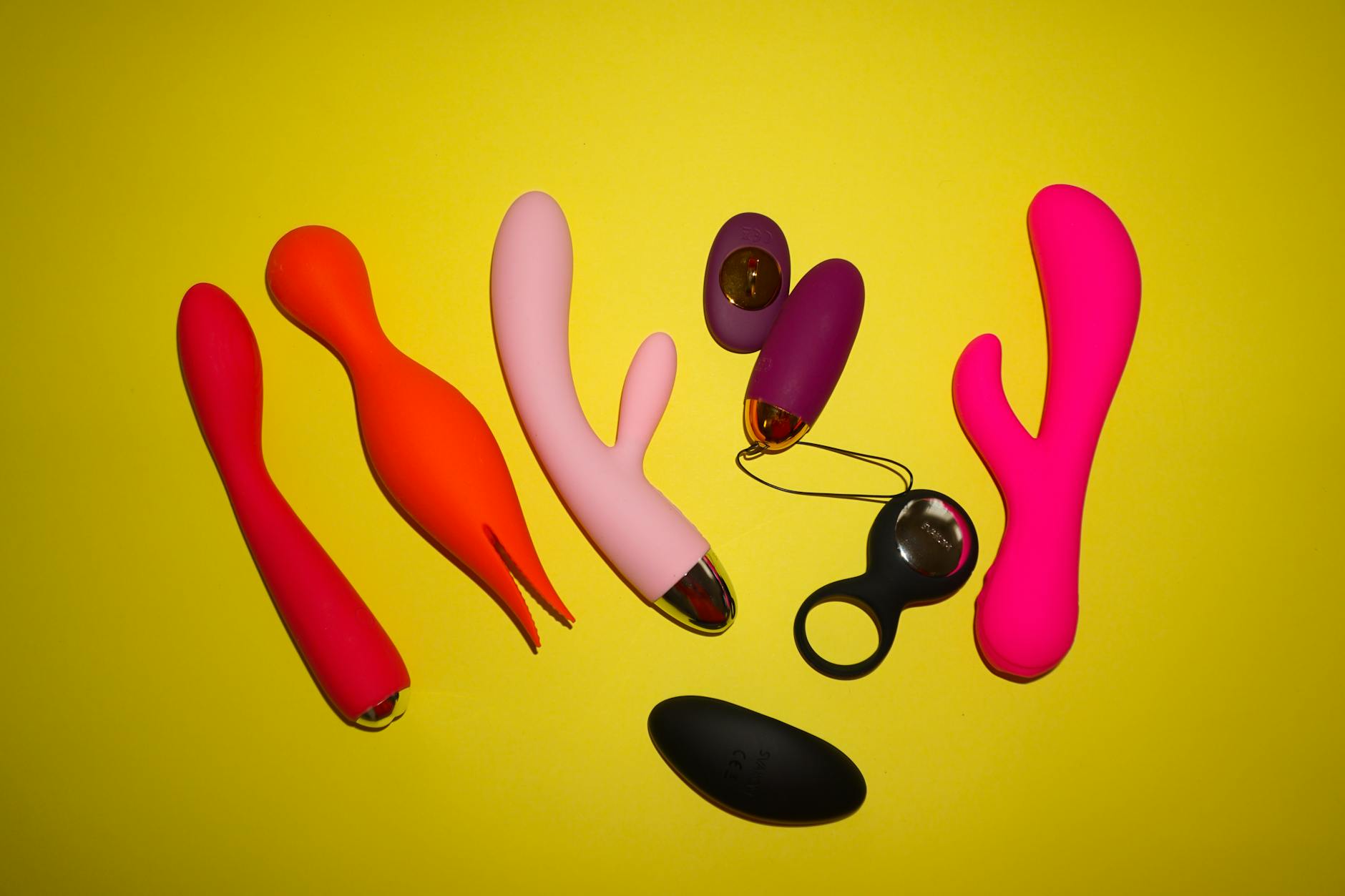
Let's talk about the decade nobody warns you about
Perimenopause is the weird middle zone where your body starts sending mixed signals but you're not officially "menopausal" yet. Hormones spike, crash, and spike again. Your cycle gets unpredictable. Mood shifts. Sleep gets messy. And somewhere in that chaos, pleasure can feel like it's on a dimmer switch you didn't install.
Here's what you actually need to know: perimenopause changes how your body responds to stimulation. It doesn't erase your capacity for pleasure. And a lemon vibrator, which works through gentle suction rather than aggressive vibration, becomes weirdly effective precisely because your tissues are getting more sensitive during this transition.
What perimenopause actually does to your body
Estrogen and progesterone don't drop evenly during perimenopause. They fluctuate wildly. One week you might feel hypersensitive to everything. The next week, the same stimulation feels distant. Your pelvic floor tightens in response to stress and hormonal shifts. Vaginal tissue gets thinner and less lubricated, even though you're not officially in menopause yet.
The clitoral tissue itself doesn't change structurally during perimenopause. The nerves are still there. The capacity for arousal remains. What shifts is blood flow, lubrication, and how quickly your nervous system registers sensation.
This is actually important: many people think they're "losing" pleasure during this phase. You're not. Your body is asking for a different approach.
Why lemon vibrators work differently during perimenopause
A lemon clitoral vibrator uses air-pulse suction technology instead of direct vibration. This matters enormously during perimenopause for three reasons.
First, suction engages the whole clitoral structure, not just the external tip. During perimenopause, when sensitivity is erratic, this broader stimulation pattern often feels more satisfying than pinpoint vibration. You're not fighting against increased sensitivity. You're working with it.
Second, the suction doesn't require lubrication to feel good. During perimenopause, when your natural lubrication is unpredictable, this removes a major friction point (literally and figuratively).
Third, suction stimulation tends to build arousal more gradually than vibration. During a decade when your nervous system is already in flux, a slower build often means better control and fewer awkward plateaus.
Timing matters now (and it didn't used to)
One of the strangest parts of perimenopause is that your body's response to stimulation shifts with your cycle. Days 1-7 (or whenever your actual bleeding starts), you might feel more aroused and more responsive. Around ovulation, you might feel hypersensitive to everything. The week before your period, you might feel numb.
This isn't the same as before. It's more exaggerated.
Here's the practical move: track your cycle for one month alongside how you feel during solo time. You'll probably notice a pattern. Some people find they're more responsive mid-cycle. Others feel best during menstruation itself. A few feel better right after their period ends.
Once you know your pattern, you can stop expecting the same response every time. Instead of thinking "why isn't this working?" you can think "oh, it's week-before-my-period energy. I'll use pattern 2 instead of pattern 1 on my Hello Nancy Lem." This reframe alone removes a huge amount of frustration.
Lubrication strategy during the perimenopausal decade
Most women in perimenopause benefit from external lubrication, but the timing and type matter.
Water-based lubricant is your friend with a lemon clitoral vibrator. It's compatible with silicone toys, lasts long enough for a session, and you don't need much. The suction action of the device will distribute it.
Here's what I tell my clients: use lube even if you don't think you need it. Your body's lubrication pattern is erratic right now. Using external lube removes the guesswork and often makes the experience better because you're not fighting dryness halfway through.
Some people find that warming the lube slightly (by running it under warm water) helps. Others prefer it cool. Experiment.
The sensitivity calibration your body needs
During perimenopause, your clitoris might feel hypersensitive one day and completely numb the next. This is neurological, not psychological.
The Hello Nancy Lem has adjustable patterns. During this decade, you want a lower-intensity starting point than you might have needed five years ago. Start on pattern 1 or 2. The suction will feel gentle but effective. If it feels too light, move to pattern 3. If you're on pattern 5 and it still feels muted, you're probably having a low-sensitivity day. Stop, use lube, and try again tomorrow.
One critical point: if you feel pain, stop immediately. Pain during perimenopause can signal vulvovaginal atrophy, which is treatable with a topical cream. It's not something to push through with a better vibrator.
Pelvic floor tension and how it changes things
Most women develop more pelvic floor tension during perimenopause. Your muscles are protecting you from perceived threat. Stress, hormonal shifts, sleep deprivation (hello, night sweats) all ramp up pelvic tension.
A tense pelvic floor can actually block sensation. You might feel like you need more intensity when what you really need is less tension.
Before you use your lemon vibrator, try this: lie down, place your hand on your lower belly, and take five deep breaths where your exhale is longer than your inhale. Breathe into your pelvic floor like you're trying to relax it open. You're not trying to "engage" it. You're trying to let it soften.
Do this for one minute, then start with your device. The difference in sensation is usually immediate.
When arousal takes longer (and that's completely fine)
During perimenopause, arousal often takes longer to build. You might need 15 or 20 minutes instead of 5. This isn't a sign something's wrong. It's just how your nervous system is functioning during this hormonal transition.
Many women find that extending their warm-up time actually makes the experience better. You're not rushing toward orgasm. You're exploring sensation. A lemon clitoral vibrator is excellent for this because the suction pattern naturally encourages longer sessions without fatigue.
Set a timer if you need permission to stay there that long. Twenty minutes to yourself is not selfish. It's maintenance.
Partner communication during perimenopausal shifts
If you have a partner, they might notice changes too. Your interest might fluctuate. Your responsiveness might shift mid-session. Your comfort with certain types of touch might change.
The move is to talk about it outside the bedroom. "I've noticed my body's responding differently during this cycle. It's not about you. It's just my hormones shifting. I'm exploring what works for me right now." Most partners appreciate honesty more than you'd expect.
If your partner is interested in being involved, you can explore using a lemon suction vibrator together. Some couples find that taking the pressure off simultaneous orgasm actually improves connection.
FAQ: Perimenopause, pleasure, and lemon vibrators
Can I use a lemon vibrator if I'm bleeding heavily during perimenopause?
Yes, absolutely. Some women find they're more sensitive during heavy-flow days, so start with lower patterns. Others feel least responsive during their period. The only reason not to use a lemon clitoral vibrator during menstruation is personal comfort. Physically, it's completely safe.
Will using a lemon vibrator more often make my sensitivity better or worse?
Neither. Your sensitivity during perimenopause is driven by hormonal fluctuation, not by how much you use a device. Using a lemon vibrator won't deplete your sensitivity or train your body to need more. It's a tool, not a dependency. Use it as much as feels good.
How does antidepressant medication affect my response to a lemon vibrator during perimenopause?
If you're on SSRIs during perimenopause, orgasm might feel harder to reach. A lemon clitoral vibrator often helps because the broader suction stimulation sometimes bypasses the numbness that SSRIs can create. If you've recently started medication and notice a change, give it two weeks. The adjustment period matters. If numbness persists, talk to your prescriber about timing or dosage. Some people find using their device at different times of day helps.
Is it normal for my orgasms to feel different during perimenopause?
Completely. Your orgasms might feel stronger, weaker, more localized, more diffuse, or take longer to build. All of this is normal during this hormonal decade. If you've always had one type of orgasm, you might discover new patterns using a lemon suction vibrator, which stimulates the whole clitoral structure differently than vibration alone.
Should I use a lemon vibrator more or less during perimenopausal weeks with hot flashes?
There's no rule. Some women find that focusing on their own pleasure grounding them actually reduces the anxiety around hot flashes. Others prefer to skip it on high-symptom days. Listen to what feels right. If you're experiencing intense hot flashes, staying cool matters more than orgasms. It's fine to take a break.
Can using a lemon vibrator during perimenopause help with mood and sleep?
Orgasm and sexual pleasure can improve mood and sleep quality, partly because of oxytocin release and partly because of the stress relief. During perimenopause, when sleep and mood are already fragile, this can genuinely help. If you're struggling with both, solo pleasure with a lemon clitoral vibrator before bed might be worth trying. The relaxation response is real.
What changes, what stays, and what's ahead
Perimenopause is a transition decade. Your body is shifting. Your hormones are erratic. Your relationship to pleasure is evolving. This is not the time to white-knuckle your way toward the same experience you had at 30.
It's the time to get curious. To adjust your approach. To give yourself permission to explore what works for you right now. A lemon vibrator, with its gentle suction technology and adjustable patterns, is one of the best tools for staying connected to pleasure during this specific transition.
Your capacity for pleasure hasn't gone anywhere. You're just learning to access it differently. And honestly? For a lot of women, that learning process opens doors they didn't even know existed.
If you're navigating perimenopause and feeling disconnected from pleasure, check out our guide on <a href="/blog/how-to-use-lemon-vibrator-when-clitoral-sensitivity-changes-with-age">how sensitivity shifts with age</a>. You might also find <a href="/blog/why-lemon-vibrators-feel-different-after-stopping-hormonal-birth-control">this breakdown of hormonal shifts</a> useful if you've recently changed your birth control.
Your body's changing. That's not a crisis. It's information. And you get to decide what to do with it.