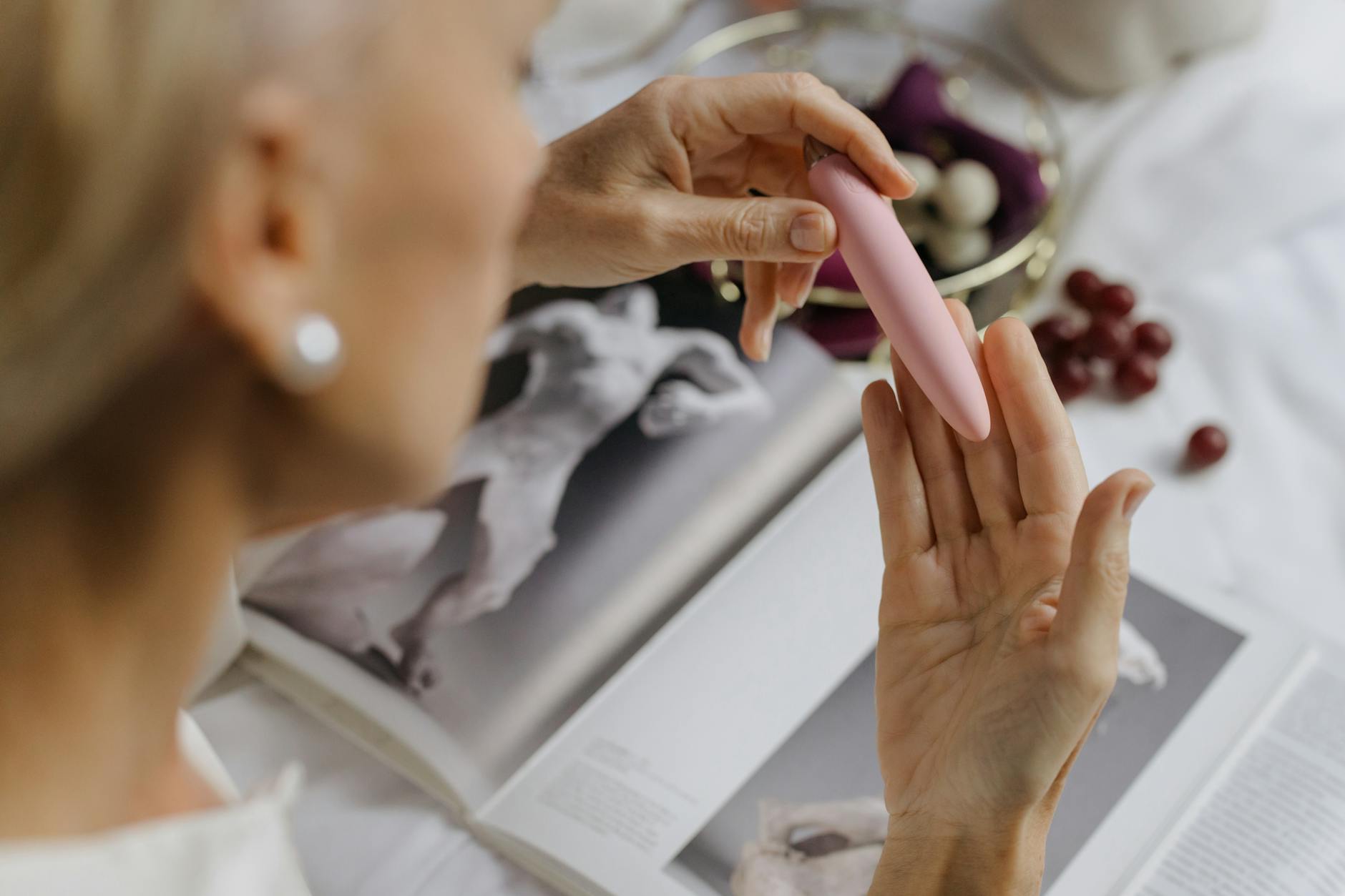
The real reason your partner is nervous
Let's start here: your partner's hesitation isn't actually about the vibrator. It's about what they think the vibrator means. They're worried it signals that they're not enough. That you're dissatisfied with them. That the toy is a replacement, not an addition. These fears are almost never voiced directly, which makes them harder to address. But if you understand what's actually going on underneath the resistance, the conversation becomes solvable.
Why this matters more than you think
According to couples research, partners who avoid introducing pleasure tools often cite fear of rejection or judgment as the primary barrier. But the flip side is equally true: partners who feel shut down about toys often experience that rejection as a referendum on their desirability. When you introduce a lemon vibrator the wrong way, you're accidentally confirming his worst fear. When you introduce it the right way, you're giving him permission to see the toy as what it actually is: a tool that enhances what you already have together, not a replacement for him.
Here's the thing: your nervousness about his reaction makes total sense. You're risking rejection on something that matters to you. But the conversation you're about to have is actually an opportunity to build deeper trust.
Start with honesty, not the toy
Don't lead with the object. Lead with the feeling.
This conversation should happen outside the bedroom, when you're both relaxed. Not as a joke during sex, not as a surprise, not as a suggestion you're throwing out casually. Your partner needs to feel that this matters to you, and that you care about his feelings.
Say something like: "I've been thinking about our sex life, and I really value it. I also want to explore some things that might help me feel even more present and connected. I'd like your input on trying something together."
Notice what that does: it centers your relationship, not the toy. It's collaborative. It acknowledges that his opinion matters. Now you can introduce the actual idea.
Address the fear directly
He might say, "Do you not like what I do?" Or, "Are you saying I'm not enough?" This is the moment to not minimize his feelings. Don't say, "That's silly, of course you're enough." That dismisses what he just shared.
Instead: "No. You're absolutely enough. This isn't about replacing anything. It's about adding something that might help me feel even more. Some people use music during sex. Some use different positions. This is like that. It's about exploration, not about what's missing."
Then be specific. Explain what you actually want. "I've read that lemon vibrators work really well for clitoral stimulation. I'm interested in seeing if that could feel good for me. I'd love for you to be part of that. But I get it if you want time to think about it."
Reframe what the toy actually does
Many partners confuse vibrators with substitutes because they don't understand the mechanics. Your partner might think a lemon clitoral vibrator is designed to replace penetration or partner touch. It's not.
Explain it practically: "A lemon vibrator is designed to stimulate the clitoris in a specific way. It's a different sensation than hands or mouth or penetration. All of those things feel good. This is just another way to feel good. Like how a massage and a hug are both nice but completely different."
You could even let him research it himself. Point him toward neutral, educational resources. Sometimes hearing it explained by someone else, outside the bedroom context, helps him stop thinking of it as a threat and start thinking of it as a tool.
Make it a "we" thing from the start
The biggest mistake is treating the vibrator like it's your solo project that he's just tolerating. Instead, involve him in the process.
If he's willing, go shopping together online. Let him see that lemon vibrators come in different intensities and styles. Let him have a role in the choice. If you're thinking about an air-suction vibrator like the Lem, show him how it works. Let him hold it. Let him see that it's not intimidating, and that it doesn't require him to do anything differently.
When you actually use it together for the first time, don't spring it on him. Have a conversation beforehand. "So I'm thinking we could try it this weekend. I'd like you to be in the room. You don't have to do anything different. I'm just going to explore and see how it feels." Give him agency. Let him know he can watch, participate, ask questions, or step out if he needs space. Giving him control actually reduces his anxiety.
Watch for the moment it clicks
Something shifts for most partners when they realize the toy isn't replacing them. It's when they see their partner's pleasure increase. When they notice that the vibrator doesn't change the dynamic between them. When they realize that you're still turning to them, still kissing them, still wanting them.
Many partners move from hesitant to enthusiastic when they understand that pleasure isn't a finite resource. Your orgasm doesn't diminish his role. It enhances the whole experience. In fact, partners often find that watching their partner experience deeper pleasure is genuinely hot.
If he stays hesitant
Sometimes, even after this conversation, a partner isn't ready. That's okay. What matters is that you heard him, and that you're not forcing something on him.
You have a few options. You could ask what specifically makes him uncomfortable and whether time might change that. You could suggest that using the toy solo, outside of partnered sex, might feel less threatening to him. Or you could explore other ways to enhance pleasure together that feel safer to him right now. Sometimes people need time.
But here's what you shouldn't do: abandon your own pleasure to keep the peace. Your satisfaction matters. If this is something you genuinely want to explore, and he's genuinely unable to support that, that's a conversation worth having with a couples therapist or counselor. A good relationship can hold space for both of your needs.
The conversation after the first time
Once you've actually tried it, check in. Not during sex, but later. "What did you think?" Let him share honestly. Did it feel weird? Did he enjoy watching you? Did it feel different from what he expected? His answer tells you what to do next.
Many partners say something like, "I thought it would feel threatening, but it was actually kind of hot." Or, "I wasn't sure, but I liked seeing you feel so good." Others need more time. Either way, the conversation has opened the door. You're no longer guessing. You're talking directly.
Introducing a lemon vibrator when your partner is hesitant is really about introducing a conversation about desire, communication, and trust. The toy is just the vehicle. If you can have an honest conversation about why he's nervous and what pleasure means to both of you, you've actually built something stronger than just adding a new tool to your sex life. You've built a foundation where both of you feel safe bringing your real needs to the table.
People also ask
Why does my partner feel threatened by vibrators?
Partners often equate vibrators with inadequacy. If you want external stimulation, they worry it means they're not satisfying you. This belief usually comes from cultural messaging that sex should be entirely partner-focused, and that needing anything else signals dissatisfaction. In reality, most bodies require clitoral stimulation to orgasm, and that's biology, not a referendum on your partner's skill or worth.
Can I use a lemon vibrator with my partner if they're unsure about it?
Yes, but the approach matters. Start by using it solo so you get comfortable with it. Let your partner see that it's a normal tool, not a big deal. When you're ready to include them, frame it as an exploration you want to share, not something you need from them. Give them control over the pace and the boundaries.
What if my partner refuses to let me use a vibrator?
That's a boundary worth examining. Your pleasure matters. If your partner is controlling what happens with your body, that's not a communication issue. That's a respect issue. A sex-positive therapist or couples counselor can help you both understand what's driving that refusal, but ultimately, your sexual autonomy is non-negotiable.
How do I make my partner feel secure while introducing a lemon clitoral vibrator?
Involve him in the process. Let him choose the vibrator with you. Explain how it works. Use it first solo so it's not a shock. When you do use it together, make sure he knows his role hasn't changed. You still want his touch, his presence, his connection. The vibrator is an addition, not a replacement. Reassure him that pleasure is cumulative, not competitive.
Will using a lemon vibrator change our sexual relationship?
Probably. But in a good way. Most couples find that introducing pleasure tools actually increases communication and intimacy. You're having conversations you might not have had otherwise. You're learning what your partner needs to feel secure and what you need to feel satisfied. That's the foundation of a stronger sexual relationship.
Should I ask permission to use a vibrator, or just do it?
It depends on your relationship dynamics, but generally, having a conversation first builds more trust than surprising your partner. You don't need his permission to explore your own pleasure, but inviting him into the conversation rather than springing it on him mid-session shows respect and care. If you've already tried it solo and want to introduce it into partnered sex, that's a separate conversation worth having beforehand.