Here's what actually happens after five, ten, or twenty years
Orgasms don't disappear in long-term relationships. They do get predictable. The rhythm becomes automatic, the buildup follows the same script, and somewhere between year three and year eight, the person who once surprised you has become a pattern you both know by heart. That's not failure. That's what happens when comfort replaces discovery.
What changes isn't capacity. It's novelty. And novelty is the thing that makes the nervous system actually light up.
Why couples get stuck in the same pleasure pattern
When you've been with someone for years, sex often locks into a groove. You know what works, so you do that thing. They know what works, so they do their thing. Efficiency feels like love until one day it feels like routine. The orgasm still happens, but somewhere along the way it stopped feeling like an event and started feeling like a checkbox.
Here's the data that changes the conversation: couples who introduce novelty into their intimate lives report both higher satisfaction and stronger emotional connection. Not because the novelty itself is magic. Because novelty forces attention. When something new enters the room, you can't autopilot. You have to stay present.
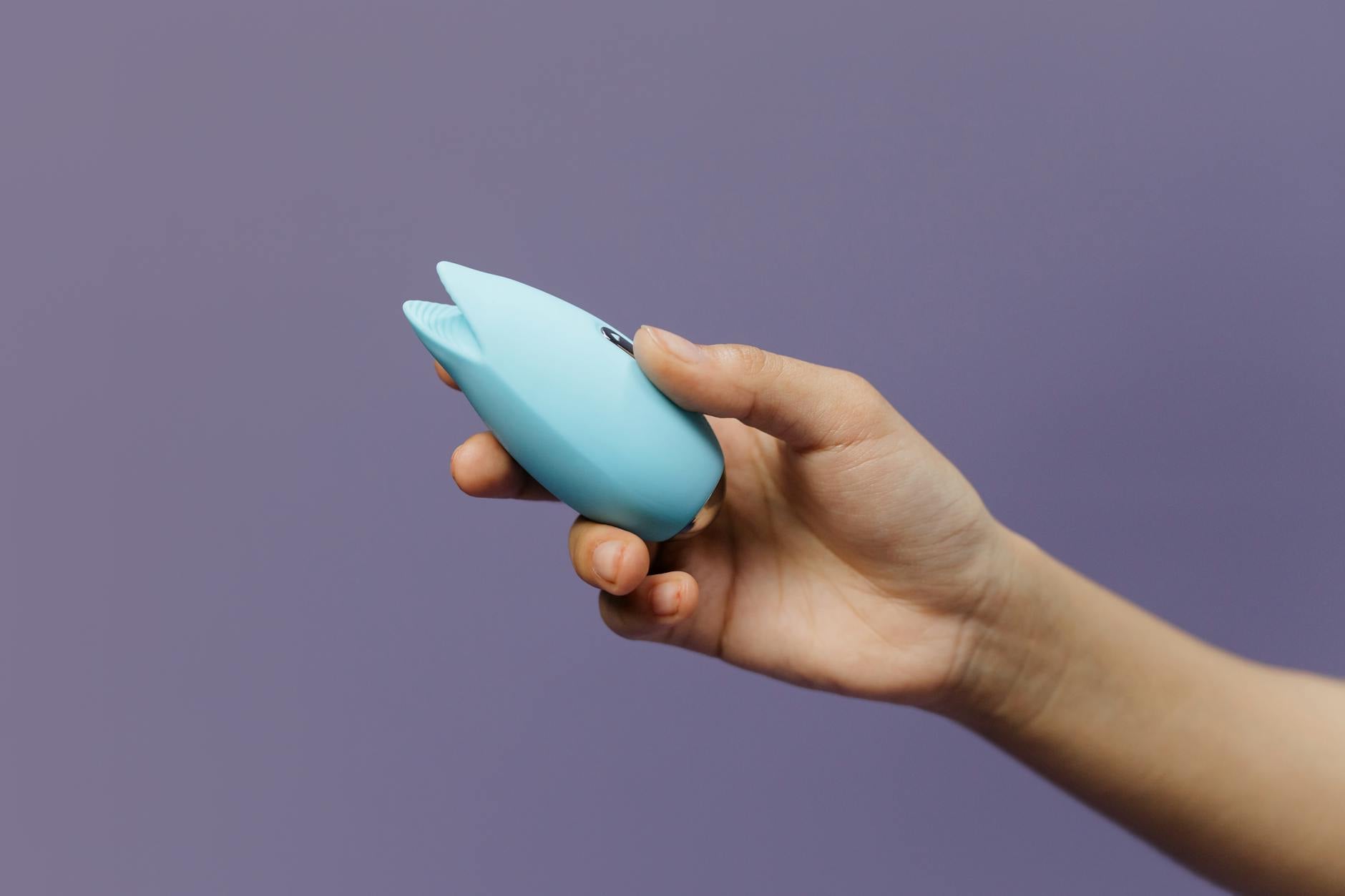
A lemon clitoral vibrator does that specific thing. It's not a replacement for your partner. It's a reset button.
How a lemon vibrator changes the dynamic
When you bring a toy into partnered sex, the default assumption is that it's about stimulation that the partner can't provide. That's partly true, but it misses the bigger piece. A lemon vibrator, specifically, changes the conversation because it's designed for clitoral suction rather than traditional vibration.
Most partners can't replicate that sensation. And that's the point. It creates a new stimulus in a body that thought it knew all its own buttons. For the first time in years, your partner gets to watch you experience something genuinely novel. That shift in attention, from "here's what we always do" to "let's see what this does," is where the reconnection lives.
The Lem, for instance, uses pulsing air stimulation that mimics natural suction. It doesn't require the same kind of direct pressure that can become desensitizing over time. For long-term couples where sensation has gotten muted, that's huge. Suddenly the body's arousal response wakes up because it's encountering something new.
Setting expectations before you bring it up
Introducing toys into a long-term partnership requires a different conversation than introducing them early on. Years of sex have created narratives. Sometimes they're helpful ("we know what works"). Sometimes they're limiting ("this means something's wrong with us").
Before you even mention a lemon vibrator, establish this: it's not about inadequacy. It's about curiosity. If your partner hears "I need more" what they often process is "you're not enough." That's not true, and it's worth saying directly.
Instead: "I've been thinking about how our bodies change and how pleasure can change too. I want to try something together that might help us both feel something new." That frames it as exploration, not criticism.
If resistance comes up, listen for what's underneath. Sometimes it's insecurity. Sometimes it's just unfamiliarity. Both are workable. Insecurity needs reassurance ("this is us getting closer, not me leaving"). Unfamiliarity needs information and a low-pressure introduction.
How to actually use a lemon vibrator together
Start on a night when you're not performance-focused. Not a special occasion with pressure attached. Just a regular evening where you have time and no external pressure.
Begin with foreplay as normal, without the toy. Get aroused. Let your body settle into the familiar rhythm first. This matters because it keeps the new thing from feeling jarring. You're not replacing intimacy. You're layering it.
Once you're actually aroused (not just technically foreplay-adjacent), introduce the lemon vibrator. Start at pattern one or two. The point is not intensity yet. The point is sensation. Most people jump to the highest setting immediately, which overloads the nervous system. Instead, explore what each pattern feels like. Let your partner watch your response. This is where presence comes back.
Your partner can use the toy while you're also together, or they can hand it to you and let you guide it. Both work. The rhythm that works depends entirely on your body and your dynamic. The magic isn't in doing it "right." It's in doing it together and paying attention.
Orgasms might take longer than usual the first time. Your body is processing new input. That's fine. Slower often means more intense anyway.
The conversation after matters more than you think
Right after sex is not the time to debrief. You're both in a vulnerable state where criticism lands twice as hard. Instead, just be present. Touch. Cuddle. Let your nervous systems settle.
The next morning or later that day, revisit it simply: "What did you notice?" or "How did that feel?" Listen without fixing. If your partner felt weird, that's information, not rejection. If it felt amazing, that's information too.
Most importantly, normalize that it might take a few times to feel natural. The first time you use a toy together can feel awkward because you're learning a new skill together. That awkwardness is actually good. It means you're both beginners, both uncertain, both figuring it out. That equality is where real intimacy lives.
Why lemon clitoral vibrators work specifically for long-term couples
Clitoral vibrators designed with suction technology, like a lemon vibrator, work particularly well in long-term partnerships because they engage sensation in a new way without requiring new positions or complicated choreography. You don't have to learn a whole new sexual script.
The other piece is that clitoral orgasms with suction tend to feel structurally different from orgasms built on friction alone. Deeper. Less about speed, more about pressure waves. For partners who've been having orgasms the same way for years, that difference in sensation is enough to reset the entire experience. The brain doesn't recognize it as "the usual thing." It registers as new. And new is exactly what rekindles attention.
What to do if it doesn't land the first time
Sometimes the first time with a toy doesn't work. Orgasm doesn't happen, or it does but feels weird, or one partner shuts down emotionally. None of this means it won't work eventually.
The most common issue is expectation. You brought in the toy expecting it to fix something, and if you're both holding that hope too tightly, it becomes pressure. Pressure kills arousal. So reset: try it again in a week or two, this time with zero expectation of a specific outcome. Just exploration.
The second most common issue is that one partner feels threatened. If that's happening, you need a conversation that's separate from sex. Reassurance that toys are additive, not replacement. Sometimes that takes repeating. That's okay.
When to call in outside help
If bringing a toy into the relationship triggers conflict that doesn't resolve with conversation, couples therapy is legitimate. Not because the toy is the problem. Because there's something underneath the toy that needs real attention. Maybe it's resentment. Maybe it's a communication pattern that got locked in years ago. Maybe it's grief about how time has changed the relationship.
A good therapist can help both of you untangle what the toy actually represents and what's really making it feel threatening or shameful. That clarity changes everything.
Honestly though, most couples who actually do the work of introducing a toy together report that the experience brings them closer. Not because the toy is magic. Because the conversation required to bring a toy into the relationship is the same conversation you should have been having about pleasure, novelty, and desire all along. The toy just makes it concrete enough that you finally have it.
One more thing
Years together is a feature, not a bug. You know each other's bodies. You have history. You have trust. A lemon vibrator doesn't replace any of that. It just gives you permission to get curious again about someone you thought you already knew completely. And often, that curiosity is how long-term partnerships actually stay alive.
People also ask
Will using a toy together make my partner feel replaced or inadequate?
Not if the conversation is right. The research is clear on this: couples who introduce toys as part of exploration, not as a fix for "missing" something the partner provides, report stronger intimacy. Frame it as "let's see what we can experience together" rather than "you're not enough." Your partner's insecurity is real, but it's workable with reassurance and time.
How do I introduce the idea without making it seem like something's wrong?
Timing and framing matter. Pick a moment outside of the bedroom when you're both calm. Lead with curiosity: "I've been thinking about how our pleasure could expand, and I want to explore that with you." Not, "our sex life is boring." Lead with what you want to build, not what you want to escape.
What if my partner is totally against toys?
Resistance often masks something specific. Is it shame? Insecurity? Unfamiliarity? Ask that question. If it's shame, education helps. If it's insecurity, reassurance helps. If it's just "I don't want that in my sex life," that's a boundary that deserves respect. You don't get to override a partner's boundary for novelty. But you do get to understand what's underneath the boundary and whether there's another path forward.
How often should we use a toy together?
Whatever frequency keeps it fun. Once a week, once a month, once in a blue moon. The minute it becomes routine or obligatory, it loses the thing that made it work in the first place. The power of novelty is that it breaks routine. Once you routinize the novelty, you're back where you started. Use it when you both want to, not on a schedule.
Can a lemon vibrator actually change how an orgasm feels?
Yes. The suction-based stimulation of a lemon clitoral vibrator engages different nerve endings and creates a different pressure pattern than friction-based stimulation. That physical difference translates to a different sensation. Some people describe it as deeper, others as more concentrated, others as waves instead of peaks. Your body will tell you what it feels like.
What if the toy works but the emotional distance is still there?
A toy can shift sensation. It can't shift resentment or years of unexpressed hurt. If emotional intimacy is the real gap, a toy is just a nice thing that happens on top of the gap, not something that closes it. That gap needs real conversation, maybe therapy, maybe a fundamental reckoning about whether the partnership is actually workable. A lemon vibrator is great, but it's not a substitute for real intimacy work.
Sources and references
Gottman, J. M., & Silver, N. (2015). The Seven Principles for Making Marriage Work. Harmony Books.
Perel, E. (2018). Mating in Captivity: Unlocking Erotic Intelligence. Harper Perennial.
Metz, M. E., & Epstein, N. (2002). Assessing and treating sexually dysfunctional couples. Journal of Clinical Psychology, 58(5), 629-643.
Laumann, E. O., Paik, A., & Rosen, R. C. (1999). Sexual dysfunction in the United States: Prevalence and predictors. JAMA, 281(6), 537-544.