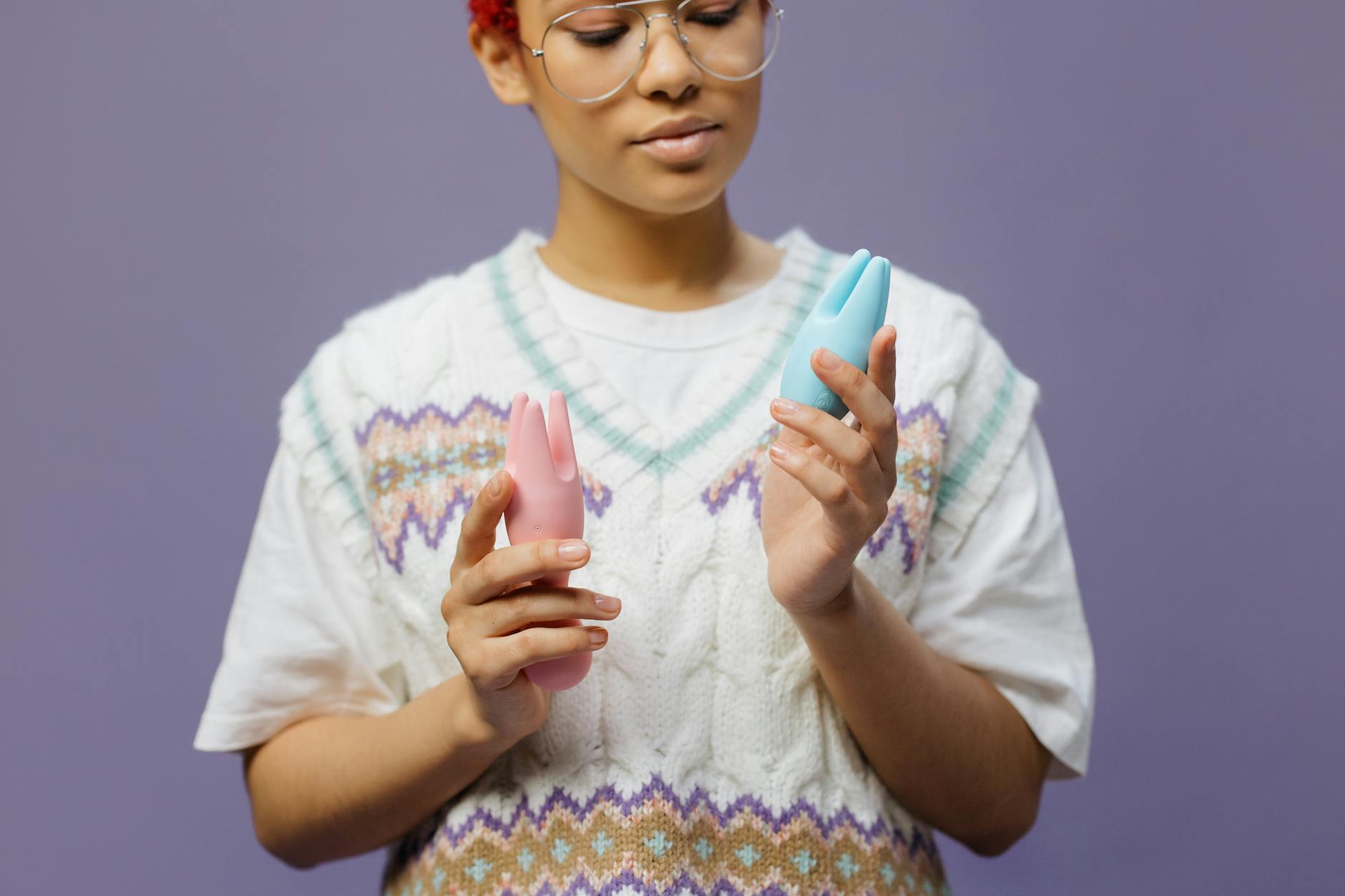
The conversation you're avoiding
Let's be real. Bringing up pleasure, desire, or sexual exploration with a partner is one of those conversations that can feel harder than anything else you actually discuss together. You can argue about money. You can negotiate who does dishes. But talk about what you want in bed? That hits different.
The silence sits there. It gets heavier. You start wondering if bringing it up at all will make things weird, or worse, make your partner feel criticized or inadequate. So you don't. And then nothing changes. And the distance grows quietly.
Here's the thing though: a lemon clitoral vibrator can actually be the opening you need. Not as a replacement for talking, but as a permission slip to start.
Why vibrators work where words get stuck
Couples therapists have known this for years. When direct conversation fails, sometimes you need an object to bridge the gap. A vibrator does something psychologically interesting: it shifts the conversation from "what's wrong with us" to "what could we explore together." It's the difference between critique and curiosity.
Think about how your brain processes these two things:
"I need more stimulation" feels like criticism. Your partner might hear "what you're doing isn't enough." Their nervous system gets defensive. Game over.
But a lemon vibrator sitting on the nightstand, offered without judgment or pressure, is saying something totally different. It's saying "I want to feel good, and I want you here while that happens." That's collaborative. That's safe.
There's also the practical side. Lemon vibrators, especially suction-style toys, provide a type of stimulation that fingers or conventional methods simply can't replicate. When your partner sees you having a genuine, visible response to something new, it often dissolves the anxiety. The performance pressure drops. Everyone gets more honest.
How to actually bring it up
Timing matters here, and it's not what you think. Don't do this right before sex or during an emotional conversation. That's too much weight on a single moment.
Instead, bring it up casually, outside the bedroom, when you're both relaxed. A walk. During dinner. When you're doing something else and there's less eye contact pressure.
Keep the opener simple: "I've been curious about trying something new. I found this clitoral vibrator that's supposed to feel amazing. Would you be open to exploring it together?" That's it. You're not asking permission. You're not apologizing. You're naming something you want and inviting them in.
If they get defensive or withdrawn, don't push. But most people, when they realize you're not critiquing them or asking them to change, actually get curious too. They want to understand what feels good to you. They want to be the one who knows.
The first time using it together
Start with your partner present but not necessarily involved. You control the toy. You show them how it works. You describe what you're feeling in real time. This removes the performance aspect entirely.
You might say things like: "That pattern feels intense." Or "I like switching back to this setting." Or "This pressure right here is the sweet spot." You're narrating your own pleasure, which is honestly educational for both of you.
After you've had a solo experience they can witness, you can then invite them to help. Maybe they hold it. Maybe they help you find different positions. Maybe they're simply present while you use it. The specific mechanics matter way less than the fact that you're doing something vulnerable together and there's no judgment happening.
What happens next (the conversation it opens)
Here's where the real magic starts. Once you've used a lemon vibrator together without shame or weirdness, the floodgates actually open. You've proven that pleasure conversations don't have to be scary.
You might find yourself saying things like: "I want to try this more often." Or "I'm curious what happens if we combine this with something else." Or even "I realized I like being able to relax and not worry about your experience for once."
These conversations would have been impossible before the vibrator entered. The toy gave you proof that wanting more, wanting different, wanting specific things isn't rejection of your partner. It's just honesty.
Many couples report that introducing a vibrator together actually strengthens their connection. Not because the toy is magic, but because they finally talked about desire directly. They moved from assumption and avoidance to actual communication.
When resistance shows up (and how to handle it)
Some partners get defensive. "Isn't my hand / mouth / penis enough?" Yes. And a vibrator isn't about adequacy. It's about variety.
You might need to reframe this a few times: "This isn't about you not being enough. This is about me discovering what else feels good. I want to know my own body better, and I want you to see that side of me."
If your partner has deep-rooted shame or anxiety about sexuality, that's real and it's worth noting. That might require a therapist to unpack properly. But often what looks like resistance is actually fear of doing it wrong, or shame about their own desires they've never verbalized.
A lemon clitoral vibrator can be the opening to that conversation too: "I notice you seem uncomfortable. I'm not asking you to change. But I'd like to understand what's coming up for you."
The longer game
Using a lemon vibrator together isn't a one-time thing unless you want it to be. As the newness settles, you'll figure out what role it plays in your intimacy. Maybe it becomes a regular part of your routine. Maybe it becomes something you use occasionally. Maybe it opens the door to exploring other things entirely.
The real win isn't the vibrator itself. It's the fact that you and your partner proved you can talk about desire, try new things, and stay connected while doing it. That's relationship resilience. That's intimacy deepening.
What started as "I can't talk to them about this" becomes "we figured out how to explore together." And everything else gets easier after that.
Common questions couples have
Will my partner feel replaced or insecure?
Not if you frame it right. The difference between "I want this instead of you" and "I want this with you" is everything. A lemon clitoral vibrator isn't competing with your partner. It's expanding what's possible together. When they see how much pleasure you experience, most partners actually feel proud they were part of it.
Is it weird to use a vibrator with my partner watching?
It feels weird for about thirty seconds. Then it feels intimate. You're literally showing someone the most vulnerable, honest version of your pleasure. That's not weird. That's trust. And yeah, there's an adjustment period for both of you. But weird feelings pass. Connection lasts.
What if we disagree on how often to use it?
Talk about it like you'd talk about any other difference. "I really enjoy this once or twice a week. What feels right to you?" Maybe you compromise on frequency. Maybe you each use it independently and together at different times. There's no one right answer. The point is you're discussing it instead of letting resentment build.
Can a lemon vibrator actually fix communication problems?
Not by itself. A vibrator can't save a relationship where the foundation is broken. But it can be a powerful tool for couples where communication has stalled around pleasure and desire specifically. It's an intervention, not a cure. The real work is the conversation that follows.
What if my partner suggests using it and I'm the hesitant one?
Take time to sit with that hesitation. Is it shame? Is it fear of judgment? Is it worry about your own pleasure? Once you identify what's actually happening, you can address it directly. Maybe you start by using it solo first, so you feel confident before including your partner. Maybe you need reassurance that your partner isn't criticizing you. Get specific about what would make you feel safe.
How do I know when to bring in a sex therapist?
If you try using a lemon vibrator together and it reveals deeper issues (control, shame, mismatched desires that feel irreconcilable), that's when a professional makes sense. A sex therapist or couples counselor who specializes in intimacy can help you untangle what's actually going on beneath the surface. There's no shame in that. Sometimes you need a trained mediator to get to the real conversation.
The bottom line
Partner communication about pleasure doesn't have to be a confrontation. A lemon clitoral vibrator can be an invitation instead of an accusation. It shifts the dynamic from "what's wrong" to "what could be better," and that shift changes everything.
Your partner probably wants to know what makes you feel good. They're probably scared to ask. A vibrator gives you both permission to be curious instead of anxious. And once you've opened that door together, you realize it was never as dangerous as it felt from the outside.