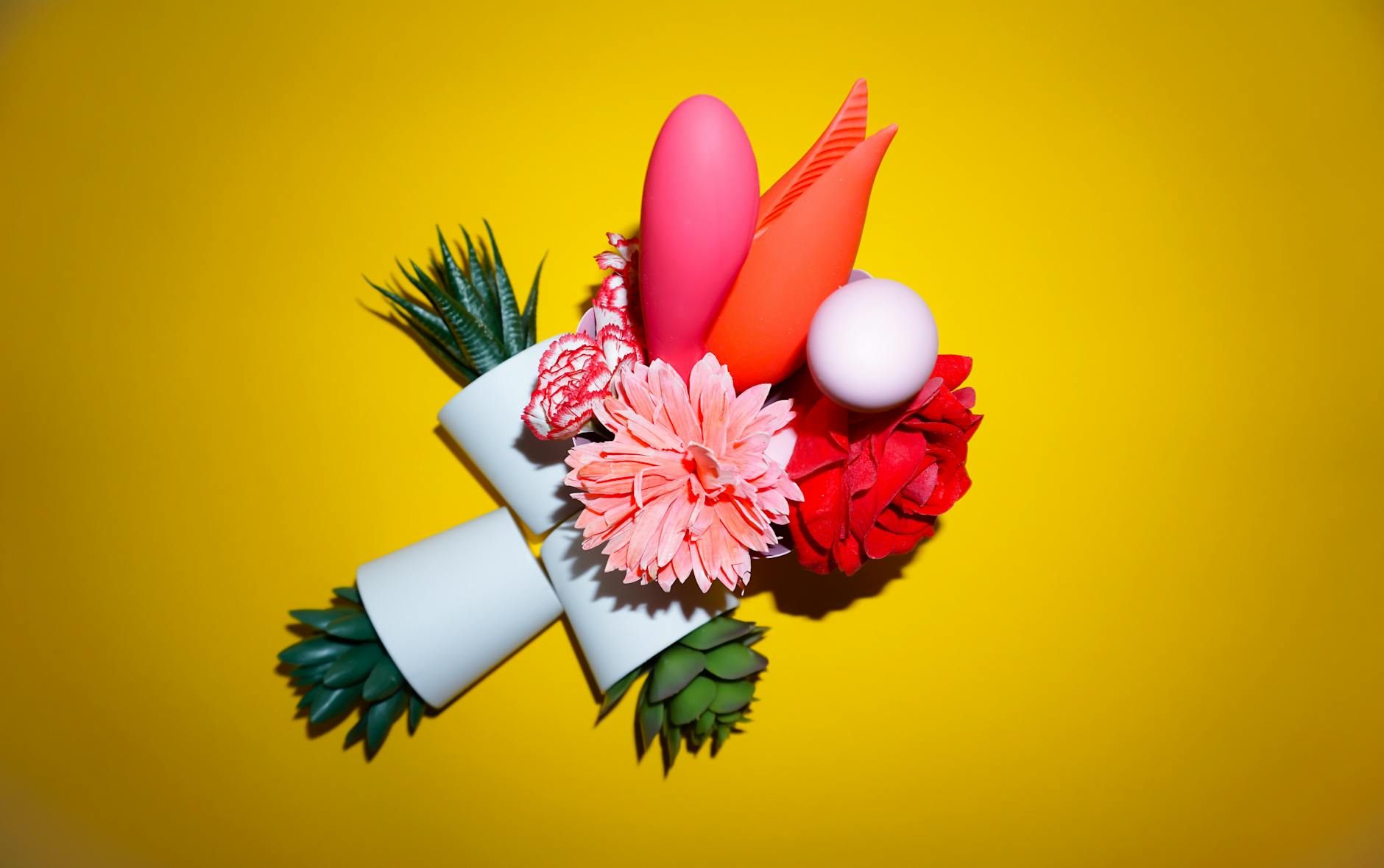
Okay so here's what nobody tells you about PCOS and pleasure
PCOS (polycystic ovary syndrome) doesn't just mess with your cycle, your skin, or your energy. It rewires how your body experiences arousal and orgasm. The elevated androgens, the insulin resistance, the unpredictable hormonal swings. They all change how sensation travels through your nervous system and how your clitoris responds to touch.
That's not a character flaw. That's biology demanding a different approach.
If you've ever felt like your body suddenly forgot how to get turned on, or like even the right touch at the right moment just... doesn't land the way it used to. That's PCOS. And it's incredibly common. The good news: a lemon vibrator designed for clitoral stimulation works with PCOS hormonal patterns, not against them.
Why PCOS changes your arousal pattern
Let me back up and explain what's happening under the surface. PCOS means your ovaries produce excess androgens (think testosterone and its cousins). More androgens actually increase baseline sexual desire in theory. But here's the contradiction: they also increase sebum production, affect skin sensitivity, and mess with the delicate blood flow that feeds arousal.
Meanwhile, insulin resistance. PCOS almost always includes some degree of it. Insulin resistance dulls the nervous system's sensitivity to stimulation. Your clitoris has thousands of nerve endings, but when insulin signaling is off, those nerves respond more slowly and less intensely.
Then there's the emotional layer. The unpredictability of PCOS (cycles that come every three weeks or every three months, energy crashes, mood swings) makes it hard to trust your body. Anticipating pleasure requires a baseline level of internal safety. PCOS erodes that.
So you're working with: higher desire but delayed arousal, intense sensations that feel muted, and a nervous system that's less confident about what's coming next.
How a lemon clitoral vibrator fits PCOS differently
A lemon vibrator uses air-pulse suction technology rather than direct vibration. This matters because it stimulates nerves through gentle, rhythmic pressure instead of friction. For PCOS bodies, that distinction is the difference between working with your nervous system and fighting it.
Here's why that works: the suction pattern activates a broader area of clitoral tissue without the intense focused pressure that can feel overwhelming or numb on sensitive skin. The Lem, for example, uses pulsing air waves that mimic a particular type of stimulation that PCOS bodies tend to respond to faster than traditional vibrators.
Plus, the suction approach is less dependent on baseline clitoral engorgement. With PCOS, blood flow to the genital area can be unpredictable. A lemon sucker doesn't require your clitoris to be fully engorged to create sensation. It creates sensation, which then triggers engorgement. It flips the sequence in your favor.
The specific technique that works when hormones are in chaos
Don't start at full intensity. This is non-negotiable.
With PCOS, your nervous system needs a longer runway. Your clitoris is sensitive to the type of stimulation, not the amount of it. So step one: use the lowest setting (pattern 1 or 2 on a lemon vibrator). Place the suction cup directly over your clitoris and sit with it there for 30-45 seconds before moving.
What you're doing is building sensation gradually. The air-pulse tech starts priming blood flow to the area. You'll feel a gentle tugging sensation, not intense pressure.
After 30-45 seconds, micro-movements. Don't glide or press hard. Instead, shift the device slightly side to side (about a quarter-inch) or lift and replace it gently. These micro-adjustments change which nerve fibers are being stimulated without shocking your system.
Then. And only then. Increase to pattern 3 or 4. Skip the middle settings if they feel jarring. Many people with PCOS find there's a sweet spot at intensity 3 or 4 where everything clicks. Below that feels like teasing. Above it feels overwhelming.
Stay there for 2-3 minutes minimum. Your clitoris needs time to build sensitivity under consistent, moderate stimulation. Rushing this phase is the most common reason PCOS bodies don't reach orgasm with traditional toys.
The lubrication and timing piece
You might think air-suction technology doesn't need lube. You'd be wrong. Not for function, but for comfort. A thin layer of water-based lubricant on the opening of the suction cup (not on the clitoris itself) creates a better seal and removes micro-friction that can feel slightly unpleasant on PCOS-sensitive skin.
One pump of lube. That's it.
Timing: PCOS bodies are less predictable. On days when your androgens are high (usually mid-cycle), arousal might come faster. On days when insulin sensitivity dips, you might need 10 extra minutes of warm-up. There's no "right" timeline. The lemon vibrator's range of intensities lets you meet your body where it is, not where you expect it to be.
If you're not feeling anything after 5-6 minutes on pattern 3, drop back to pattern 1-2 and slow down. Sometimes PCOS bodies respond to patience more than pressure. Other times your glucose is just spiking and today isn't the day. That's fine.
What to do if sensation feels numb or delayed
Some people with PCOS experience temporary numbness in the clitoral area, especially during high-androgen phases of their cycle. This is real and it's frustrating. Here's what helps.
First: don't jump to higher intensity. Numbing usually responds to slower stimulation with longer hold times, not faster. Try patterns 1-2 for 60-90 seconds without moving. This builds a cumulative sensation that eventually breaks through the numbness.
Second: check whether you're managing insulin resistance. Blood sugar stability genuinely affects nerve sensitivity. If you've just eaten refined carbs or skipped meals, your clitoral sensation will be duller. This isn't permanent. It's just chemistry.
Third: consider whether stress or anxiety is stacked on top of PCOS. Cortisol narrows blood vessels. PCOS already has blood flow challenges. Together they create a numbing effect. If that's your situation, three minutes of grounded breathing before you start actually works.
When to use the lemon vibrator in your cycle
If you have any cycle at all with PCOS (even an irregular one), ovulation windows matter. Estrogen peaks right before ovulation. That's when clitoral sensitivity is highest naturally. If you can track your ovulation (apps exist specifically for PCOS; they're not perfect but they help), aim to use your lemon vibrator in that window.
You'll notice orgasm arrives faster and feels more intense. Ride that advantage. Use the lemon clitoral vibrator 2-3 times in that week.
Outside the ovulation window, expect to need longer warm-up time and possibly higher intensity. That's not failure. That's just PCOS.
The partner conversation if you have one
If someone else is in the picture, this is worth saying: PCOS doesn't mean you want your partner less or that you've lost desire. It means your nervous system processes stimulation differently. A lemon vibrator isn't a replacement for your partner. It's a translation tool. It helps them understand what rhythm, intensity, and type of touch actually works for your body.
Show them. Let them hold the lem while you guide the intensity and timing. This becomes foreplay that works for your PCOS, not despite it.
The stuff that actually matters
Orgasm with PCOS isn't about finding the "right" toy. It's about understanding that your arousal timeline is different, your sensitivity is context-dependent, and your body needs permission to work at its own pace. A lemon clitoral vibrator gives you that. The suction technology, the adjustable intensity, the gentle approach. They all align with how PCOS bodies actually function.
Your pleasure isn't broken. It's just writing in a different dialect. A lemon vibrator is fluent in that dialect.
People also ask
Can I use a lemon vibrator if my PCOS includes insulin resistance?
Yes, absolutely. Insulin resistance doesn't change how the vibrator works mechanically. What it does change is your baseline clitoral sensitivity on any given day. You might notice you need longer warm-up time or lower intensity on days when your blood sugar is less stable. Water-based lubricant and patience handle that. If you're actively managing insulin resistance through diet or medication (like metformin), you'll likely notice your orgasm response stabilizes too.
Do PCOS and birth control change how a lemon sucker feels?
Most PCOS birth control (usually combination pills or the hormonal IUD) suppresses androgens to manage symptoms. That means lower baseline desire but potentially more stable arousal once it starts. The lemon vibrator's advantage is that it doesn't rely on spontaneous desire. It creates sensation that builds into desire. So even on hormonal birth control, you'll likely find the air-pulse suction more responsive than traditional vibrators.
Is it normal for orgasm to take longer with PCOS?
Completely normal. Insulin resistance and androgen fluctuations both delay the nerve signals that lead to orgasm. If you used to reach orgasm in 3 minutes and now it's taking 10-15 minutes, that's not a dysfunction. That's PCOS. A lemon clitoral vibrator usually cuts that timeline down by 30-50% because the suction approach works with your nervous system's processing speed, not against it. Expect 6-10 minutes once you find your pattern.
Can PCOS make the lemon vibrator feel too intense?
Yes. Some people with PCOS have heightened clitoral sensitivity (the opposite of numbness). For them, even pattern 3 can feel overwhelming. Start at pattern 1 and stay there until you're confident in the sensation. The lemon vibrator's real advantage is the breadth of its intensity range. You can go really gentle. Take advantage of that. Orgasm at pattern 2 is just as valid as orgasm at pattern 4.
What if I'm not sure whether my issues are PCOS or something else?
Fair question. PCOS symptoms overlap with thyroid conditions, hormonal imbalances, and even anxiety. If you're struggling with arousal or orgasm and you suspect PCOS, get bloodwork done. You want your testosterone levels, insulin, and fasting glucose checked. Your gynecologist can order these. Once you know what's actually happening in your body, adjusting your approach to pleasure becomes much easier. In the meantime, the lemon vibrator works well for hormone-related sensitivity shifts regardless of the specific cause.
Can I use a lemon vibrator if I have other gynecological conditions alongside PCOS?
Maybe. If you have endometriosis, PCOS is actually more common alongside it. The suction approach is gentler than traditional vibrators, which is usually good news. If you have vulvodynia or vestibulodynia, the gentle pressure of a lemon sucker might feel better than direct vibration. But the real answer is: talk to your gynecologist before introducing any new toy. They know your specific situation. They can tell you whether air-pulse suction is wise for your body right now.
The bottom line
PCOS rewires your nervous system. It changes desire, delays arousal, and makes sensation unpredictable. Those things are frustrating and they're real. They're also not permanent or unfixable. A lemon vibrator designed for clitoral stimulation works with PCOS hormonal patterns instead of pretending they don't exist. Start low, go slow, be patient with your timeline, and trust that your body's version of pleasure is completely valid. It just reads a different way than you might have expected.