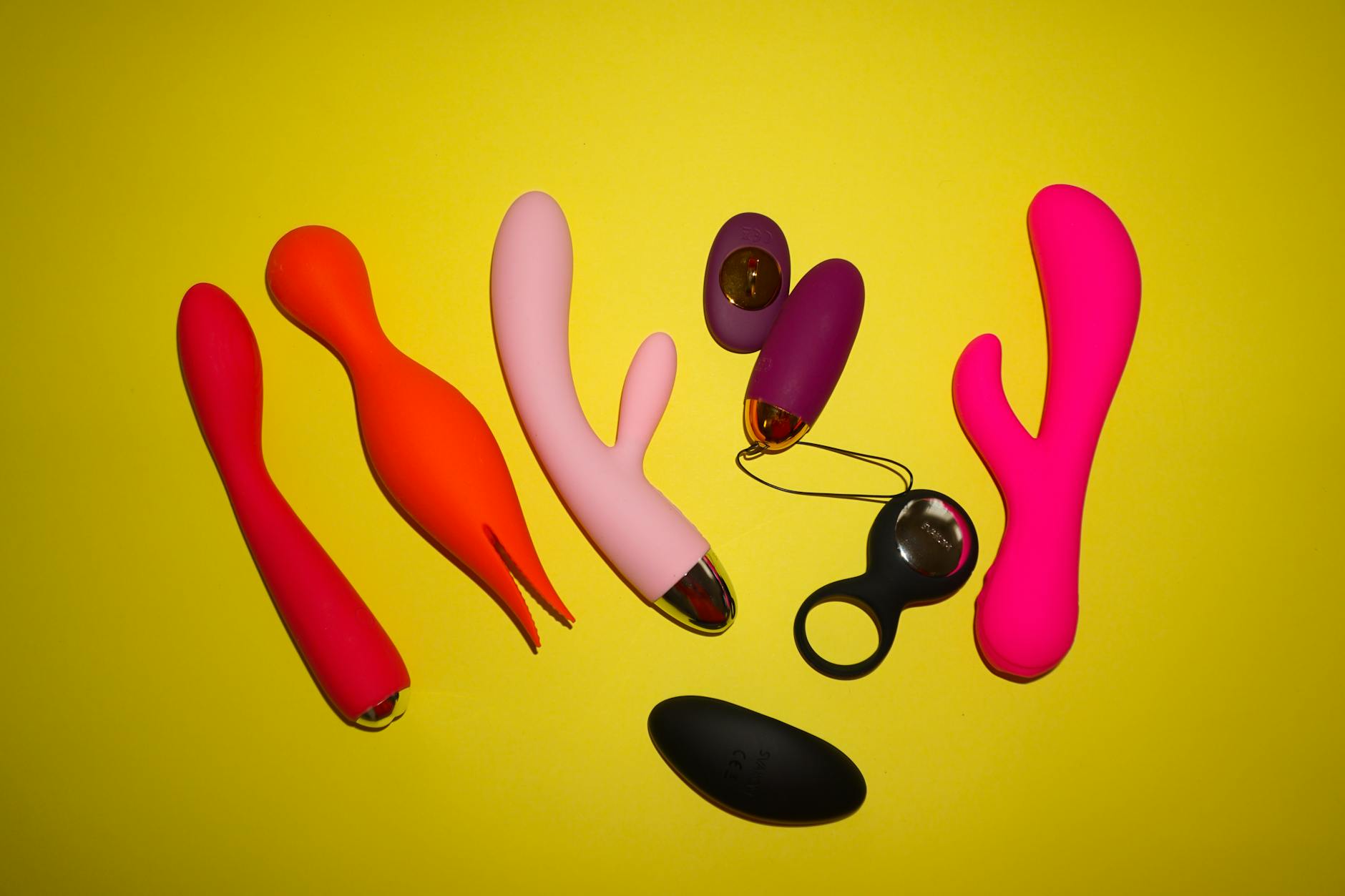
How to Use a Lemon Vibrator After Sexual Trauma
Let's be real: pleasure after trauma isn't automatic. Your nervous system has learned to protect you, sometimes by shutting down sensation entirely. That's not broken. That's survival. But if you're ready to gently reclaim what's yours, a lemon vibrator can be part of that journey, not a shortcut through it.
I've worked with countless clients rebuilding their relationship with physical pleasure after assault or abuse. The ones who succeed do it slowly, with intention, and always on their own terms. This is the framework I share with them.
Understanding your nervous system after trauma
Your body isn't punishing you when pleasure feels difficult or inaccessible. After sexual trauma, your nervous system gets stuck in protection mode. Touch that would normally feel good can trigger a freeze response. Arousal pathways that used to activate automatically now require deliberate, conscious choice.
This is called hyper-vigilance. Your body is scanning for danger even when none exists. The good news is that your nervous system can learn new patterns. Pleasure, approached gently and on your own schedule, is part of retraining that system.
A lemon clitoral vibrator offers something powerful: control. You choose when it turns on. You choose the intensity. You choose to stop. That agency, rebuilt over time, helps your nervous system recognize that this sensation is safe because you're choosing it.
The foundation: somatic awareness and consent with yourself
Before you pick up any toy, spend a week just tuning into your body without agenda. Notice where you hold tension. Notice where you feel safe. Notice where you go numb.
Then, here's the critical part: practice saying no to yourself, out loud. "Not today." "Not like that." "Stop." Your nervous system needs to hear that you have agency within your own experience. When you practice honoring your own "no," pleasure becomes something you're choosing, not something being done to you.
Once you feel grounded in that consent, you can begin exploring sensation. A lemon vibrator, specifically, works well because suction-based stimulation feels fundamentally different from friction or direct pressure. Many trauma survivors find that this difference makes it easier to separate current sensation from trauma memories.
Starting small: your first session with a lemon vibrator
Pick a time when you feel resourced. Not when you're already depleted. Not in a moment of desperation. Pick a time when you have an hour, you're alone, and you feel reasonably safe.
Start clothed. Yes, really. Hold the lemon vibrator through your underwear for 30 seconds. That's it. Notice what happens. Does your body tense? Does it relax? Does nothing happen? All three are fine. Turn it off. Take three deep breaths.
The goal isn't arousal or orgasm. The goal is data. You're teaching your nervous system that this object, in your control, produces a predictable sensation. Over days or weeks, repeat this at the same intensity. Your body begins to recognize the pattern as safe.
Building tolerance and reclaiming sensation
Once clothed stimulation feels routine, you can try it directly on skin. But start with lower intensity settings. Most lemon vibrators like the clitoral vibrator from Hello Nancy have multiple patterns. Use setting 1 or 2. Use it for 15 to 30 seconds, then stop.
The stopping part is as important as the sensation. You're proving to your nervous system that you have complete control. You can start it. You can stop it. Nothing is being forced.
If at any moment you feel triggered, freezing, or numb in a way that feels protective rather than pleasurable, stop. Wrap yourself in something soft. Drink water. Ground yourself by naming five things you can see, four things you can touch, three things you can hear. This is called the 5-4-3-2-1 technique, and it's a proven way to bring your nervous system back online.
Pairing sensation with safety signals
Many trauma survivors find that pairing physical sensation with explicit safety cues helps rewire the nervous system's threat assessment. This might look like:
- Using a lemon vibrator only in a specific room where you feel safe.
- Lighting a particular candle before you begin, making the smell a conditioned safety marker.
- Playing a specific song or playlist that signals "this is for me, this is safe."
- Having a comfort object nearby, like a blanket or pillow you can touch if you need grounding.
Your brain loves predictability. These rituals aren't superstition. They're nervous system training. Over time, the sensory markers (the smell, the song, the room) become associated with safety and choice, not threat.
Why suction stimulation can feel different after trauma
Vibration creates a rapid oscillation that some trauma survivors find too intense or triggering. Suction, by contrast, uses gentle pressure and release. It doesn't mimic any typical touch. For many clients, that difference is crucial. A lemon sucker-style vibrator bypasses some of the associations stored in trauma memory because it's so distinct from the touch that caused harm.
If direct clitoral stimulation still feels too vulnerable, remember that the clitoris extends internally. Stimulation slightly off to the side, or on the mons pubis above the clitoris, can produce sensation that feels safer to process.
Building toward genuine pleasure, not just tolerance
After weeks of consistent, small exposures, something shifts. Your body stops seeing the vibrator as a potential threat. And then, sometimes gradually, sometimes suddenly, sensation starts to feel good.
This is not guaranteed or linear. You might have progress, then a setback triggered by something unrelated to the vibrator. That's normal. Healing isn't a line. It's a spiral.
If you have a partner, they can be part of this. But only if you're ready. Some survivors find that they need to reclaim solo pleasure first, alone with a lemon vibrator, before they're ready to share sensation with another person. That's not rejection of your partner. That's wisdom.
When to seek additional support
If using a vibrator consistently triggers flashbacks, dissociation, or panic, pause and work with a trauma-specialized therapist. EMDR, somatic experiencing, and trauma-focused CBT are all evidence-based approaches designed to help your nervous system process trauma at a deeper level.
Using a lemon clitoral vibrator can be part of healing, but it's not a replacement for clinical support. Think of it as one tool in a larger toolkit.
What to know about aftercare
After any session, especially early on, give yourself time to integrate. You might feel emotional. You might feel nothing. You might feel a little lighter. All of this is okay.
Clean your toy with warm water and mild soap. Store it somewhere private where you've chosen to keep it. These small acts of care send a message to your body: you matter, your pleasure matters, this is yours.
FAQ
Can I use a lemon vibrator if I'm still having flashbacks?
Yes, but with caution. Flashbacks and vibrator use can coexist if you have strong grounding tools in place. Start with very short sessions in a space where you feel completely safe. If flashbacks intensify, pause and work with a trauma therapist before continuing.
How long before a lemon vibrator feels good instead of scary?
This varies wildly. Some people move from tolerance to genuine pleasure in weeks. Others take months or years. Your timeline is your timeline. Rushing this process can re-traumatize. Slow is safe.
Should I tell my partner I'm using a lemon clitoral vibrator for trauma recovery?
That's your call. Some people benefit from support and accountability. Others need the space to explore privately first. There's no right answer. Do what feels safe to you.
What if I use a vibrator and feel numb or dissociated?
Stop immediately. Dissociation is your nervous system's protection mechanism kicking in. Grounding techniques like the 5-4-3-2-1 method can help. If this keeps happening, consult a trauma specialist before continuing vibrator use.
Can using a lemon sucker vibrator alone heal trauma?
No. Pleasure is part of reclaiming your body, but trauma healing is multifaceted. It usually involves therapy, sometimes medication, often community, and always time. A vibrator supports that process. It doesn't replace it.
How do I know if I'm ready to try a lemon vibrator after trauma?
You're ready when the idea of reclaiming pleasure feels like a choice, not an obligation. When you can say no to yourself and mean it. When you have some basic grounding tools in place. That might be weeks after trauma or years. Both are fine.
Reclaiming pleasure after sexual trauma is an act of resistance and self-determination. There's no rush, no deadline, and no "right way" to do it. If you're curious about lemon vibrators and wondering whether they fit your healing journey, that curiosity alone is worth honoring. Start small. Stay in control. Let your body learn at its own pace that sensation can be safe, choice, and yours.
If you'd like personalized guidance on trauma-informed approaches to rebuilding intimacy, reach out to us. We're here to listen.